Can You Use A Mini Fridge For Camping (The Honest Truth)
Yes, you can use a mini fridge for camping—but only when you have a safe, steady power source and a dry place to keep it. A standard mini fridge works well at a U.S. campsite with electric hookups, in an RV, or with a large power station that can handle its startup surge.
It is usually a poor choice for remote camping. A small 120-volt AC refrigerator can drain a battery fast, may trip a weak inverter, and is not built for rain or rough transport. For tent camping without shore power, a 12-volt compressor cooler is often the better option.
When Does a Mini Fridge Make Sense for Camping?
A mini fridge makes sense when you are staying at a campsite with electricity or using a properly sized generator or power station. It can keep drinks, meat, dairy, and other food cold without the need for ice.
The best uses include:
- Campgrounds with 120-volt electrical hookups
- RVs and travel trailers with shore power
- Long stays at one campsite
- Group camping where you need more food space
- Base camps with a generator
- Car camping near a reliable power source
A mini fridge is less useful for:
- Backpacking
- Remote tent camping
- Campsites with no electricity
- Trips with frequent moves
- Wet or exposed sites
- Short trips where a quality cooler is enough
A standard mini fridge is made for indoor use. It needs protection from rain, direct water, mud, and extreme heat. It also needs to stand level and upright so the compressor can work as designed.
Standard mini fridge versus camping fridge
A standard mini fridge normally uses 120-volt AC power. That is the same type of power found at most U.S. home outlets and many RV park hookups.
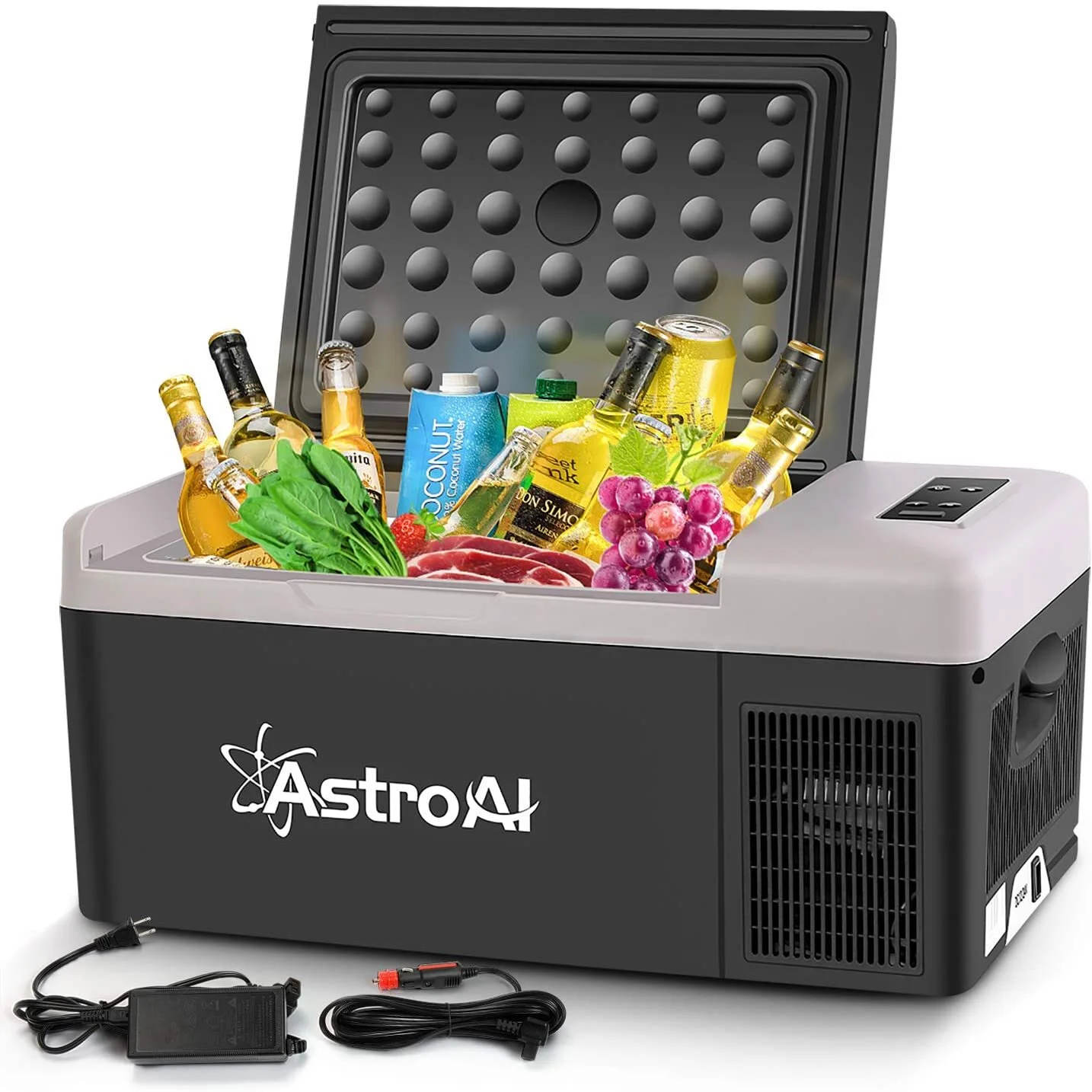
A camping fridge may use 12-volt DC power. It is designed for vehicles, batteries, and portable power systems. Many camping models use a compressor that can run efficiently from a battery.
| Fridge type | Typical power source | Best camping use | Main limit |
|---|---|---|---|
| Dorm-style mini fridge | 120V AC | Electric campsite or RV hookup | Needs steady AC power |
| Compact refrigerator | 120V AC | Base camp or long stay | Heavy and less portable |
| 12V compressor fridge | 12V DC | Car camping and off-grid trips | Costs more |
| Thermoelectric cooler | 12V DC or AC adapter | Drinks and short trips | Does not cool as well |
| Ice cooler | Ice | Any campsite | Ice melts and food space is limited |
The key difference is not size. It is power use, portability, weather protection, and how well the unit works from a battery.
We Tested 6 Best Electric Coolers Under $200 (Stop Buying Ice in 2026)
What Power Does a Mini Fridge Need?
A mini fridge needs enough power for both its normal running load and its compressor startup surge. The running wattage may look low on the label, but the compressor can briefly draw more power when it starts.
Check the rating plate on the back or side of the refrigerator. Look for:
- Voltage, such as 120V
- Running watts or amps
- Frequency, such as 60 Hz
- Model number
- manufacturer instructions
If the label lists amps instead of watts, use this formula:
Watts = volts × amps
For example, a fridge rated at 120 volts and 1.5 amps has a calculated load of:
120 × 1.5 = 180 watts
That figure does not always represent the fridge’s average use. A compressor cycles on and off. The refrigerator may draw power for part of each hour, then rest.
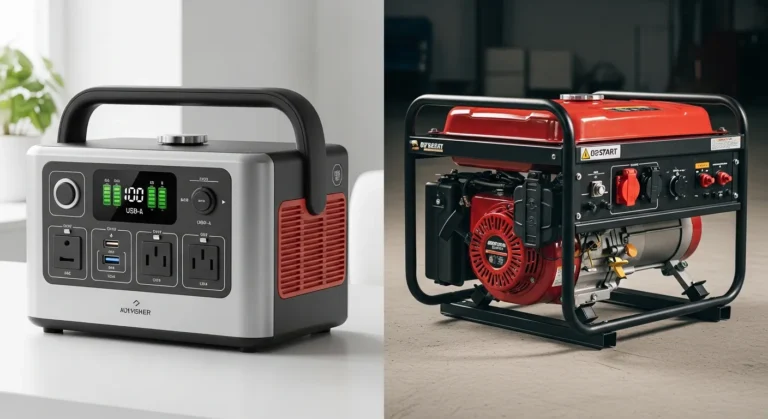
Power station sizing
A power station must meet two separate needs:
- Output power: enough watts to start and run the fridge.
- Battery capacity: enough watt-hours to run it for the planned time.
A simple estimate is:
Runtime in hours = battery watt-hours × usable efficiency ÷ average fridge watts
9 Best Portable Power Station For 12V Fridge:(Tested for Battery Life & Value)
Example calculation
Suppose a mini fridge uses an estimated average of 50 watts while cycling. A 1,000-watt-hour power station has about 850 usable watt-hours after inverter losses and reserve.
850 watt-hours ÷ 50 watts = about 17 hours
This is only a planning estimate. Hot weather, poor ventilation, frequent door opening, an aging fridge, and a warm starting temperature can reduce runtime.
Startup demand also matters. A power station rated at 1,000 watts may handle a small compressor, but the correct answer depends on its surge rating and the refrigerator’s actual startup draw. Check both manuals when possible.
Generator use
A portable generator may run a mini fridge, but it must be used outdoors and well away from tents, vehicles, doors, windows, and other openings. Carbon monoxide can build up quickly in enclosed or partly enclosed areas.
The CDC warns that generators should never be used inside a home, garage, camper, or other enclosed space. A tent is not a safe generator shelter.
Use a generator that:
- Has enough continuous wattage
- Has enough surge capacity
- Uses the correct voltage and frequency
- Sits on stable ground
- Remains dry and protected from rain
- Is placed far from occupied areas
- Is used with a working carbon monoxide alarm when appropriate
Do not run a generator inside an RV, under an awning, or inside a vehicle. Follow the generator manual and campground rules.
How to Use a Mini Fridge Safely at a Campsite
Set up the fridge on a level, dry, stable surface with space around its vents. Then connect it to a suitable power source and check that it reaches a safe temperature before storing food.
Follow these steps.
1. Check the refrigerator manual
Confirm that the model is intended for the planned environment. Some mini fridges are for indoor use only. Others may have specific limits for temperature, placement, transport, or extension cords.
Do not use a fridge outdoors just because it has a small size. Outdoor-rated appliances have different protection from moisture and temperature changes.
2. Transport it upright
Keep the fridge upright during transport whenever possible. Secure it so it cannot slide, tip, or fall.
If the fridge must lie on its side, follow the manufacturer’s instructions before turning it on. Many compressor refrigerators need time to stand upright so oil can return to the compressor. The exact wait time varies by model, so use the manual rather than guessing.
3. Choose a dry location
Place the fridge:
- Under a solid, weatherproof cover
- Away from rain and splashing water
- Out of direct sun
- On level ground
- Away from mud, sand, and standing water
- Where children and pets will not pull on the cord
Do not wrap the refrigerator tightly in plastic. A sealed cover can trap heat and block airflow.
4. Leave room for airflow
A refrigerator gives off heat as it cools. Leave the clearances listed in the manual around the rear, sides, and top.
Blocked airflow can cause:
- Longer run times
- Higher energy use
- Poor cooling
- Compressor stress
- Overheating
A shaded, ventilated location is better than a hot vehicle or closed storage box.
5. Pre-cool the fridge at home
Cool the refrigerator before leaving. Load it with already cold food and drinks.
A mini fridge uses more power when it starts warm. Pre-cooling also reduces the time that food spends in the unsafe temperature range during setup.
6. Use a safe electrical connection
Connect the fridge to a properly grounded outlet, campground hookup, generator, or power station rated for the load.
If you use an extension cord, choose one that is:
- Rated for outdoor use
- Thick enough for the distance and load
- Free from cuts or crushed areas
- Kept away from water
- Fully unwound during use
A ground-fault circuit interrupter, or GFCI, can help reduce shock risk around moisture. Do not bypass a tripped GFCI. Find the cause first.
Avoid cheap plug adapters, damaged cords, power strips not rated for outdoor use, and long undersized extension cords.
7. Verify the temperature
Use a refrigerator thermometer. The USDA recommends keeping a refrigerator at 40°F or below.
Let the fridge cool before adding food. If the temperature remains above 40°F, move the food to another cold source and troubleshoot the setup.
Can a Mini Fridge Run on a Portable Power Station?
Yes, a mini fridge can run on a portable power station if the station has the right AC output, surge capacity, and battery size. However, a small power station may last only a few hours, especially in hot weather.
Before connecting the fridge, check:
- Continuous AC output in watts
- Surge or peak output
- Battery capacity in watt-hours
- Inverter type
- Low-temperature and overload limits
- Charging options
- Manufacturer restrictions
A pure sine wave inverter is often the safer choice for appliances with motors and compressors. Follow the power station manufacturer’s guidance.
Estimating battery life
Use the fridge’s average energy use if the manufacturer provides it. If not, the nameplate wattage can provide a rough, conservative estimate, but it may not reflect the real duty cycle.
For a more careful estimate:
- Find the fridge’s energy-use data.
- Convert the value to watt-hours if needed.
- Account for inverter losses.
- Leave a reserve so the battery does not reach zero.
- Add extra demand for hot weather and frequent opening.
For example, if a refrigerator averages 45 watts and a power station provides 700 usable watt-hours:
700 ÷ 45 = about 15.5 hours
This does not mean the fridge will always run for 15.5 hours. It is a planning estimate under the assumed conditions.
Ways to reduce battery use
- Pre-cool the fridge at home.
- Keep it in shade.
- Open the door less often.
- Keep the door seal clean.
- Do not place hot food inside.
- Leave space around the vents.
- Keep the battery out of extreme heat.
- Use a larger battery only when its weight and cost make sense.
A 12-volt compressor fridge may be more efficient for battery camping because it avoids the extra step of changing DC battery power into AC power.

Is a Mini Fridge Better Than a Cooler for Camping?
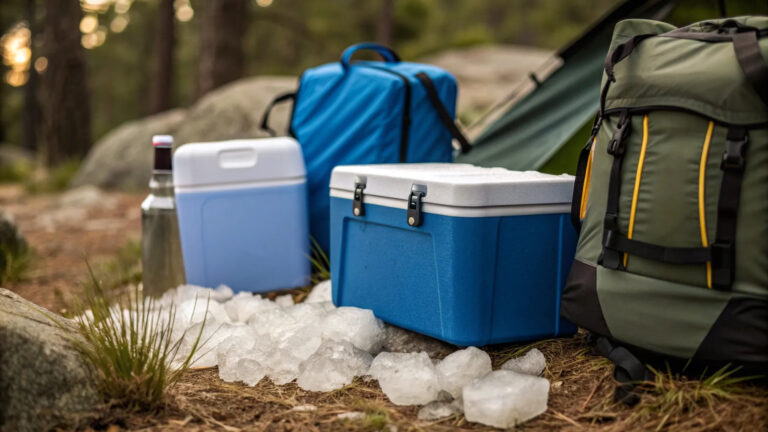
A mini fridge is better when you have reliable electricity and want steady cooling. A cooler is better when you need simple, portable cold storage without a power connection.
| Need | Better choice |
|---|---|
| Electric campsite | Mini fridge or electric cooler |
| No electricity | Ice cooler or 12V fridge with battery |
| Several days in one place | Mini fridge or 12V compressor fridge |
| Frequent moving | Quality cooler or portable camping fridge |
| Cold drinks only | Cooler may be enough |
| Raw meat and dairy | Fridge with verified temperature control |
| Rainy outdoor site | Weather-rated camping appliance |
| Lowest upfront cost | Ice cooler |
A cooler has fewer parts that can fail. It also works during a power outage or generator shutdown. Its weakness is temperature control: melted ice and warm pockets can put food at risk.
A mini fridge offers more consistent cooling, but it adds power needs, cords, weight, and setup limits. It also may not tolerate outdoor conditions.
For many U.S. campers, the practical choices are:
- Electric campground: standard mini fridge can work.
- Off-grid car camping: 12V compressor fridge is usually more suitable.
- Short family trip: insulated cooler may be simplest.
- Large base camp: mini fridge plus a safe generator or shore power may be useful.
Food Safety When Camping With a Mini Fridge
Keep the refrigerator at 40°F or below and use a separate thermometer to confirm the temperature. The built-in dial may show a setting, not the actual food temperature.
The USDA recommends discarding perishable food that has been above 40°F for more than two hours. In temperatures above 90°F, the limit is one hour.
Perishable food includes:
- Meat and poultry
- Seafood
- Eggs
- Milk and soft dairy products
- Cooked leftovers
- Cut fruit and vegetables
- Prepared salads
Pack food in sealed containers. Keep raw meat on the lowest shelf or in a leak-proof container. This helps prevent juice from dripping onto ready-to-eat food.
Do not rely on a fridge that is merely cool to the touch. Use a thermometer. If the power fails, keep the door closed and move food to another safe cold source as soon as possible.
A refrigerator that has warmed above 40°F for an uncertain length of time is not a place to take chances. When in doubt, discard the food.
Common Mini Fridge Camping Problems
Most problems come from poor power supply, blocked airflow, heat, movement, or incorrect setup. Check the safest and simplest causes first.
The mini fridge will not start
Possible causes include:
- No power at the campsite outlet
- Tripped GFCI or breaker
- Loose plug
- Power station overload
- Generator in eco mode with insufficient surge capacity
- Damaged cord
- Compressor delay after transport
First, test the outlet with another safe device. Then check the breaker, GFCI, connections, and power station display. If the fridge was transported on its side, follow the manual’s upright-rest instructions.
Stop using the fridge if you smell burning, see melted plastic, hear loud electrical buzzing, or find a damaged cord.
The fridge runs but does not get cold
Check the following:
- Is the temperature control set correctly?
- Is the door fully closed?
- Is the door seal clean and intact?
- Is the fridge in direct sun?
- Are the vents blocked?
- Was warm food loaded inside?
- Is the power source stable?
If the compressor runs for a long time without cooling, move food to another cold source. The issue may involve a failed fan, thermostat, compressor, refrigerant system, or control board.
The power station shuts off
The station may be detecting an overload or low battery. A compressor can draw a short startup surge that exceeds the station’s limit.
Try these safe checks:
- Confirm the station’s continuous and surge ratings.
- Charge the station fully.
- Remove other loads.
- Use the station’s AC outlet as directed.
- Check for an overload warning.
- Compare the fridge requirements with the station manual.
Do not keep resetting an overloaded system. If the issue continues, use a better-matched power source.
The fridge is wet or exposed to rain
Unplug the fridge only if you can do so without touching wet equipment or standing in water. Keep people away from the area and follow the appliance and power-source instructions.
Do not use the fridge again until it has been inspected if water entered the electrical parts. A standard indoor mini fridge should not be used in exposed rain.
What Size Mini Fridge Is Best for Camping?
The best size depends on how many people need cold storage and how often you will move the fridge. A smaller unit uses less space, but it may have less insulation and less room for food.
Consider:
- Number of campers
- Trip length
- Available power
- Vehicle cargo space
- Weight
- Door swing
- Vent clearance
- Food and drink mix
- Whether a freezer section is needed
A compact unit may work for drinks and a few meals. A larger mini fridge may help a group, but it can use more energy and take more space.
Do not choose by interior volume alone. Compare the appliance’s energy data, dimensions, weight, power type, and outdoor-use limits.
Can You Use a Mini Fridge in an RV?
Yes, you can use a mini fridge in an RV when the electrical system can support it and the refrigerator is installed or secured correctly. An RV shore-power connection is usually more practical than a portable battery for a standard AC mini fridge.
Check:
- RV outlet voltage
- Breaker size
- Inverter capacity
- Generator capacity
- Battery-bank limits
- Ventilation around the fridge
- Movement during travel
- Manufacturer installation rules
Secure the refrigerator before driving. Do not leave a loose mini fridge where it can tip or block an exit.
If the RV runs from batteries when disconnected from shore power, estimate the fridge’s daily energy use before the trip. A standard AC mini fridge can place a heavy load on a small RV battery bank.
Mini Fridge Camping Safety Checklist
Use this quick checklist before you leave:
- The fridge is approved for the planned location.
- The unit was transported according to its manual.
- It will stay upright and level.
- The site is dry and shaded.
- Air can move around the vents.
- The outlet or power station matches the fridge rating.
- The cord is outdoor-rated and undamaged.
- A GFCI is used where suitable.
- The generator will remain outdoors and away from openings.
- Food will be loaded cold.
- A refrigerator thermometer is packed.
- A backup cooler or cold source is available.
- The fridge is secured in an RV or vehicle.
Key Takeaways
- You can use a mini fridge for camping when you have safe, reliable power.
- A standard 120V mini fridge is best for electric campsites, RV hookups, and base camps.
- A 12V compressor fridge is usually better for battery-powered, off-grid camping.
- Keep the refrigerator dry, shaded, level, and well ventilated.
- Check both running watts and startup surge before using a generator or power station.
- Keep food at 40°F or below and carry a separate thermometer.
- Never run a generator inside a tent, vehicle, RV, garage, or other enclosed space.
FAQs
Can you run a mini fridge from a car battery?
Not directly unless the refrigerator is designed for 12V DC power. A standard 120V mini fridge needs an inverter, and the inverter must handle both the running load and compressor startup surge.
A car’s starting battery is not designed for long periods of appliance use. It may drain enough that the vehicle will not start. A separate deep-cycle battery or properly sized power station is safer for extended use.
Can you use a mini fridge in a tent?
A standard mini fridge should not be placed in a wet or tightly enclosed tent. The tent does not protect the appliance from moisture well enough, and airflow may be limited.
If you use any electrical appliance near a tent, keep the power source dry and follow the appliance instructions. Never operate a fuel-burning generator inside or near the tent.
How long will a mini fridge stay cold without power?
A closed refrigerator can stay cold for some time, but the exact period depends on insulation, food load, starting temperature, and outdoor heat. Do not use time alone to judge food safety.
Keep the door closed, monitor the temperature, and move perishable food to another cold source. Follow USDA food-safety limits rather than relying on the fridge’s appearance.
Can you put a mini fridge in a car while driving?
Only if the refrigerator is secured, ventilated as required, and powered by a suitable system. A loose fridge can become dangerous during sudden braking.
A normal 120V mini fridge also needs a correctly rated inverter or AC outlet. For travel, a purpose-built 12V compressor fridge is usually easier to power and secure.
Is a mini fridge cheaper than a camping refrigerator?
The initial price may be lower for a standard mini fridge, but total cost depends on the power system, transport needs, adapters, and protection from weather. A camping refrigerator may cost more but can be better suited to 12V power and outdoor use.
Compare the full setup rather than the appliance price alone.
Conclusion
A mini fridge can be useful for camping when the campsite provides electricity or when you have a properly sized generator or power station. Keep it upright, dry, shaded, ventilated, and connected to a safe power source.
For remote camping, a 12V compressor fridge or a well-managed cooler is often a better fit. Before your trip, check the fridge manual, calculate the power need, pre-cool the unit, and pack a thermometer and backup cold plan.