Dometic Camper Fridge Not Cooling: 5-Minute Fix Before Buying a New One
Your Dometic camper fridge isn’t cooling due to airflow, power, or cooling-unit issues. If dometic camper fridge not cooling is ruining your trip, stick with me. I’ve serviced RV fridges for years and have seen it all, from blocked flues to bad thermistors. This guide breaks down how these fridges work, why they fail, and the exact steps to fix them fast—with clear tips you can use today.
How a Dometic Camper Fridge Actually Cools
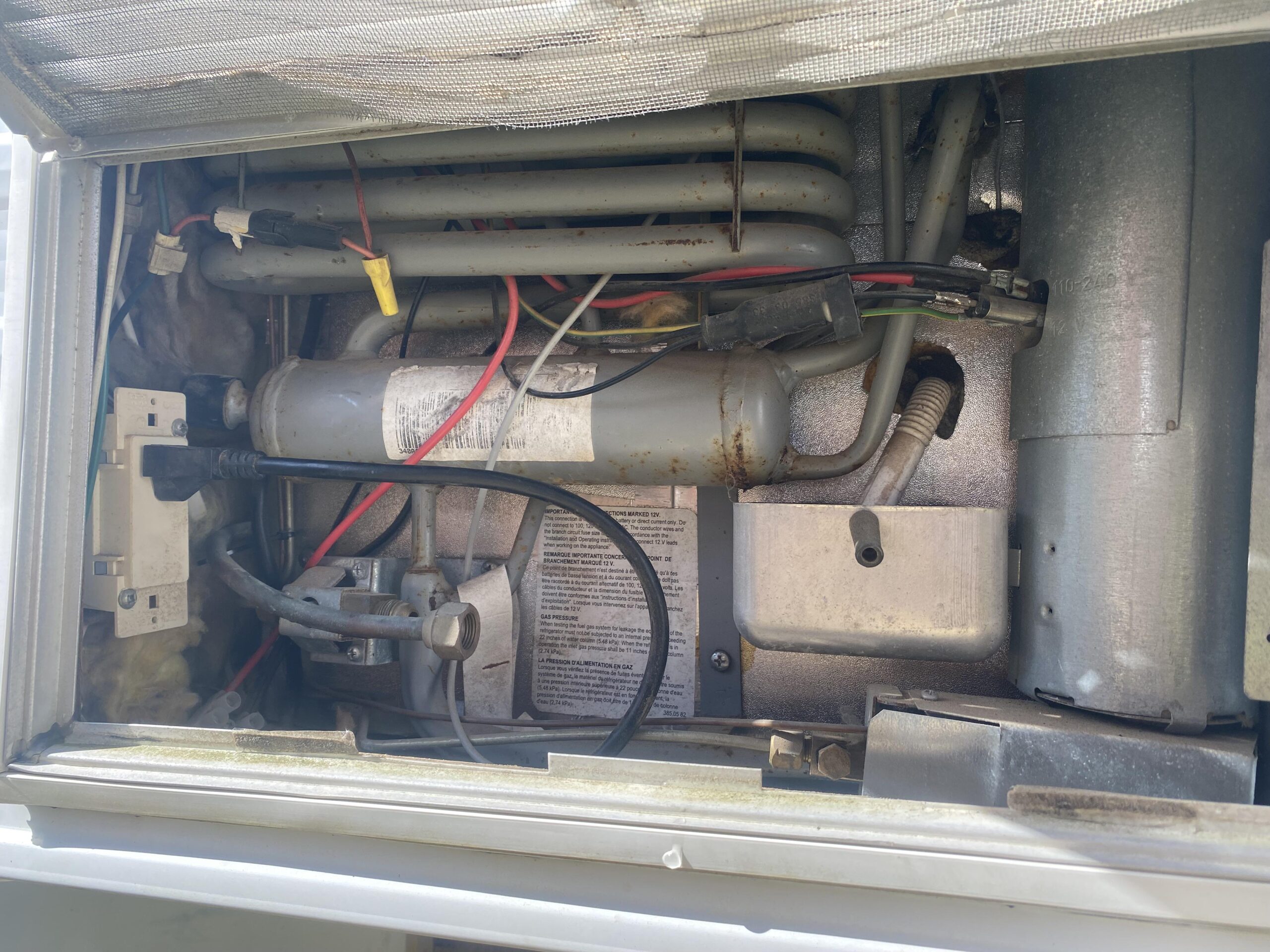
Most Dometic RV fridges use absorption cooling. There’s no compressor. Instead, heat drives a sealed mix of ammonia, water, and hydrogen. The fluid cycles, absorbs heat inside the box, and dumps it outside.
These systems have three big needs. They need steady heat, clear airflow up the flue, and a level install. Lose any one, and cooling drops fast. That is why small setup issues can look like major failures.
Top Reasons Your Dometic Camper Fridge Not Cooling
When you see dometic camper fridge not cooling, think basics first. Power, heat, airflow, and sensors cause most issues. Here are the common culprits I see on service calls.
- Poor ventilation behind the fridge Warm air can’t escape the back cavity. Heat stays trapped and kills performance.
- Off-level parking Absorption units must be level in both directions. Off-level can create liquid pooling and hotspots.
- Weak or missing heat source On electric, a bad heating element or relay kills heat. On gas, a weak flame or soot buildup does the same.
- Dirty burner or flue Soot, rust flakes, spider webs, or a missing baffle stop proper draft.
- Door gasket leaks If a dollar bill slides out easily, cold air is leaking.
- Overloading or blocking the fins Packed food or no air gap prevents cold air from circulating.
- Failed thermistor or control board Sensors out of range fool the system into the wrong cycle.
- Cooling unit failure Ammonia leaks, yellow residue, or a strong ammonia smell point to a failed sealed system.
Step-by-Step Troubleshooting For dometic camper fridge not cooling
Use this simple process. Work from easy checks to deeper tests. Take notes as you go.
- Give it time and empty space
- Run the fridge empty for 12–24 hours.
- Set temp to coldest and avoid opening the door.
- Add two small fridge fans inside to move air.
- Confirm level
- Use a small bubble level on the freezer shelf.
- Keep front-to-back and side-to-side within 1–2 degrees.
- If off, re-level or use leveling blocks.
- Check power sources
- On AC, confirm 120V at the outlet and a solid plug.
- On DC, confirm 12–13.6V at the fridge board with a multimeter.
- On LP gas, confirm propane is on and other appliances run fine.
- Inspect flame and burner (LP mode)
- Flame should be tight and blue with a defined inner cone.
- Clean soot and rust from the burner tube and orifice.
- Make sure the flue baffle hangs centered in the chimney.
- Improve rear ventilation
- Clear obstructions behind the fridge.
- Ensure lower and upper exterior vents are not blocked.
- Add a 12V vent fan to pull heat up and out.
- Test door seals
- Do the dollar-bill test all around the door.
- Replace gaskets if the bill slides out with little resistance.
- Check for cracked hinges or warped doors.
- Check the thermistor
– Slide it along the fin. Higher usually makes it colder.
- If temps do not change after hours, test resistance per manual.
- Replace if readings are far off or intermittent.
- Measure temperatures
- Use two thermometers in the box and freezer.
- Aim for 34–40°F in the fridge and 0–10°F in the freezer.
- Track change each hour to see trends.
- Look for signs of cooling-unit failure
- Strong ammonia smell or yellow powder near the boiler.
- Oily residue around tubing.
- Boiler area gets very hot but fins stay warm. This often means the sealed system is done.
Power Source And Electrical Checks That Matter
Many dometic camper fridge not cooling cases start with weak power. Absorption fridges need steady DC for controls and AC or LP for heat. Small drops or bad grounds can stop cooling.
- DC checks Confirm battery voltage at the control board. Clean grounds. Replace corroded connectors.
- AC checks Verify 120V at the outlet under load. Check the heating element for proper resistance.
- Board and fuses Inspect blade fuses on the main board. Look for soot or burned traces. Reseat connectors.
A note from the road: I once chased a “bad fridge” that was only a bad chassis ground. One cleaned lug fixed everything in minutes.
The 10 Best Camping Fridge for Van Life, Overlanding, and Car Camping
Airflow, Vents, And Fan Upgrades
Heat must rise up the flue and exit the roof or upper side vent. Poor draft equals poor cooling. This alone causes many dometic camper fridge not cooling calls.
- Vent path Make sure the back cavity is sealed from the cabin. Air should flow from the lower exterior vent to the upper vent only.
- Baffle Ensure the factory baffle sits above the condenser coil to guide air up.
- Fans Add a 12V fan near the condenser fins. Use a switch or a thermal snap-disc to automate.
Pro tip: On hot days, two small fans behind the upper vent can drop fridge temps by 5–10°F.
Why Leveling Changes Everything
Absorption systems depend on gravity. Off-level operation can overheat the boiler and cause internal blockages. If you often camp off-grid, make leveling a habit.
- Target Keep within 1–2 degrees when parked.
- Quick check Place a level on the freezer shelf. Adjust with blocks until centered.
- Habit Turn the fridge off if you must stay off-level for long. It protects the cooling unit.
If you’re still seeing dometic camper fridge not cooling after leveling, go back through power and vent checks.
Thermostat, Thermistor, And Controls
The thermistor clips to the evaporator fin and tells the board when to cycle. If it reads wrong, temps drift high.
- Thermistor basics Typical values rise as temperature rises. Out-of-range readings confuse the board.
- Simple test Move the clip up the fin to make it colder. Wait a few hours to note change.
- Replacement If moving the thermistor does nothing, replace it. Also inspect the wiring harness for breaks.
This small part causes a surprising share of dometic camper fridge not cooling cases. I carry spares in my service van for this reason.
Cooling Unit Health: Leaks, Blockages, And Heat
If power, flame, and airflow check out, the cooling unit may be failing. Look and smell.
- Leak clues Ammonia smell, yellow dust, or oily residue near the boiler or back coils.
- Overheat signs Boiler gets very hot to the touch, but inside stays warm.
- Internal blockage Long off-level use can create crystallization that blocks flow.
Once the sealed system fails, repair options are limited. You can replace the cooling unit or the whole fridge. Weigh age, cost, and labor before you decide.
Maintenance And Prevention Tips
Good habits prevent dometic camper fridge not cooling on the road. A little care goes far with absorption units.
- Vent care Clean the lower and upper exterior vents each season. Remove nests and webs.
- Burner service Brush the burner and flue. Confirm a steady blue flame.
- Seal check Inspect gaskets and hinges. Replace worn parts early.
- Packing Pack with air gaps. Use a small fan inside to move cold air.
- Pre-cool Turn the fridge on 24 hours before you load it. Pre-chill food and drinks.
I pre-cool with shore power the day before a trip. It loads the thermal mass and saves propane on day one.
Repair Or Replace: Costs And Decisions
At some point, it is time to choose. If you still face dometic camper fridge not cooling after a full checklist, compare costs.
- Low-cost fixes Thermistor, fans, gaskets, cleaning. Usually under a few hundred dollars.
- Mid-range fixes Heating element, control board, gas valve. Parts and labor vary by model.
- Major fixes Cooling unit replacement or full fridge swap. Consider age, warranty, and cabinet fit.
Rule of thumb: If your fridge is old, rusted, or leaking ammonia, replacement is often smarter than a cooling unit rebuild. Newer compressor-style 12V fridges are also an option if you have enough battery and solar.
Frequently Asked Questions of dometic camper fridge not cooling
Why does my Dometic fridge cool better on gas than on electric?
Gas flames can deliver steadier heat than a weak electric element. If AC mode struggles, test the heating element and confirm full 120V at the outlet.
How long should a Dometic fridge take to get cold?
Expect 8–12 hours to reach safe fridge temps and up to 24 hours for full pull-down. Pre-chill contents and add small fans to speed things up.
Can I run my Dometic fridge off-level for a short time?
Short periods are usually fine, but long off-level use can damage the cooling unit. If you must stay off-level, turn the fridge off until leveled.
What temperature should my Dometic fridge be?
Aim for 34–40°F in the fresh food section and 0–10°F in the freezer. Use a separate thermometer to verify real temperatures.
Is an ammonia smell dangerous?
Yes. Ammonia leaks mean the sealed system failed and the unit should be turned off and ventilated. Do not run the fridge if you smell ammonia.
Do fridge fans really help?
Yes. Fans behind the condenser and inside the box improve airflow and reduce temperature swings. They are inexpensive and easy to wire.
Could bad door seals cause warm temps?
Absolutely. Leaky gaskets let warm air in and create frost, which hurts cooling. Replace worn seals and check hinge alignment.
Conclusion
If your Dometic camper fridge not cooling has you stuck, start simple. Verify level, airflow, and power, then move to the burner, thermistor, and finally the cooling unit. Small fixes often restore full performance.
Treat your fridge like a system, not a mystery box. Do the checks, log results, and act on what you find. If this guide helped, share it with a fellow camper, subscribe for more RV fixes, or drop your questions in the comments so we can troubleshoot together.