Can Portable Power Station Run Camping Fridge (Ultimate Off-Grid)
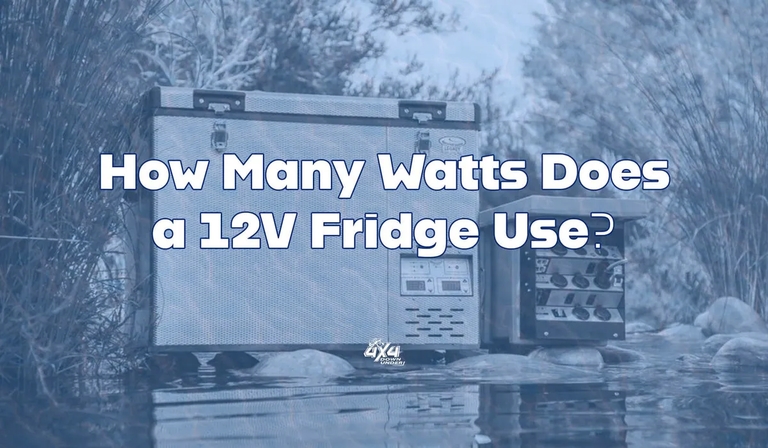
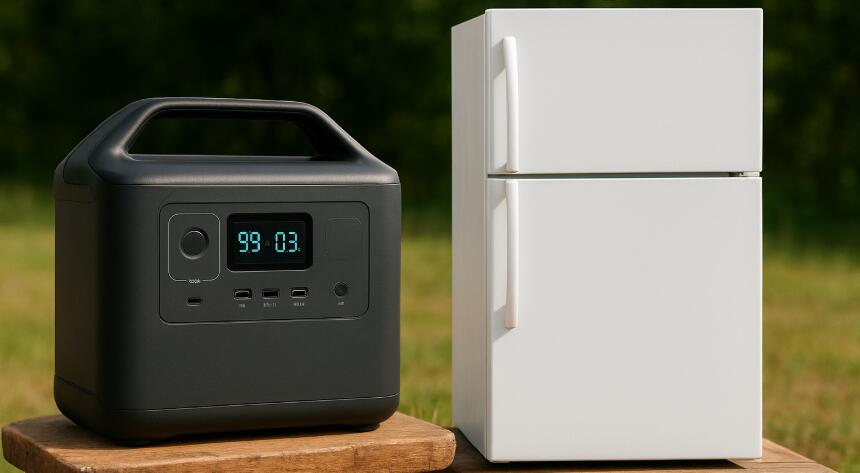
Yes. A portable power station can run a camping fridge, and many models can keep a 12-volt compressor fridge cold for one to several days. The real runtime depends on the fridge’s average power use, the power station’s usable watt-hours, outside temperature, how often the lid opens, and the power connection you use.
For most U.S. campers, a power station with at least 300 Wh can support a small camping fridge for a day. A 500–1,000 Wh unit gives more room for weather changes, phone charging, lights, and other gear.
The best setup is usually a 12V DC connection from the power station to the fridge. It avoids the extra loss caused by converting battery power to household AC power.

What You Need to Know Before Connecting a Camping Fridge
A camping fridge does not draw its rated power every minute. Its compressor turns on and off to hold the set temperature. This means the label may show 45 watts, but the fridge may use far less than 45 watts over a full day.
The key terms are:
- Watts (W): The rate at which the fridge uses power while running.
- Watt-hours (Wh): The amount of stored energy in the power station.
- Voltage (V): The electrical pressure used by the fridge and outlet.
- Amp-hours (Ah): A battery capacity rating that must be paired with voltage to be useful.
- Compressor: The cooling system used by most efficient portable camping refrigerators.
- Inverter: A device that changes battery DC power into household AC power.
A 12V compressor fridge is usually the easiest type to run from a power station. Many U.S. models have a 12V or 24V DC input and use a compressor similar to the system found in a household refrigerator.
7 Best RV Propane Refrigerator (Top Picks for Off-Grid Living)
Compressor fridges versus thermoelectric coolers
A compressor fridge can cool below the surrounding temperature and often freeze food. It is usually the better choice for multiday camping.
A thermoelectric cooler uses a different system. It may draw power almost constantly and often cannot cool as far below the surrounding air. Because of this, a thermoelectric cooler can use more energy over 24 hours even if its listed running wattage looks modest.
An absorption refrigerator, such as some RV refrigerators, has different power needs. It may run on AC power, propane, or DC power. Check its manual before connecting it to a portable power station.
How to Calculate Portable Power Station Runtime
Use this basic formula:
Estimated runtime in hours = usable power station watt-hours ÷ fridge energy use per hour
For a more useful daily estimate:
Daily fridge energy use = average watts × 24 hours
Then allow for power loss:
Required battery capacity = daily fridge energy use ÷ system efficiency
A power station rarely delivers every watt-hour printed on its case. Battery protection, inverter loss, temperature, and conversion loss reduce usable energy.
Example calculation
Suppose a camping fridge uses an estimated average of 35 watts while cycling:
- 35 W × 24 hours = 840 Wh per day
- At 85% system efficiency: 840 ÷ 0.85 = about 988 Wh
- A 1,000 Wh power station may therefore provide roughly one day in this example
However, 35 watts may be the fridge’s running draw rather than its 24-hour average. A well-insulated compressor fridge may run only part of the time. If its true average use is 15 watts:
- 15 W × 24 hours = 360 Wh per day
- At 85% efficiency: 360 ÷ 0.85 = about 424 Wh
- A 500 Wh power station may last close to one day
These are planning examples, not guaranteed results. Use the fridge’s measured energy use when possible.
Runtime examples by power station size
The table below uses a hypothetical average fridge load of 20 watts and assumes about 85% usable system efficiency.
| Power station rating | Estimated usable energy | Approximate fridge runtime |
|---|---|---|
| 300 Wh | 255 Wh | 12.7 hours |
| 500 Wh | 425 Wh | 21 hours |
| 1,000 Wh | 850 Wh | 42.5 hours |
| 2,000 Wh | 1,700 Wh | 85 hours |
A fridge that averages 10 watts may run about twice as long. A fridge that averages 40 watts may run about half as long.
Why the nameplate wattage can mislead you
A fridge may list:
- Running power
- Maximum power
- Startup power
- Average daily energy
- A range based on ambient temperature
These values are not interchangeable. The compressor can briefly need more power when it starts. A power station must handle that startup surge, even though the surge lasts only a short time.
What Size Power Station Do You Need for a Camping Fridge?
For a small 12V compressor fridge, choose a power station based on both capacity and output capability.
A practical sizing guide
| Camping use | Suggested power station size | Best fit |
|---|---|---|
| One day with a small fridge | 300–500 Wh | Minimal setup, mild weather |
| One to two days | 500–1,000 Wh | Fridge plus phones and lights |
| Two to four days | 1,000–2,000 Wh | Larger fridge or fewer charging options |
| Longer trips | 2,000 Wh or more | Large fridge, freezer use, or solar charging |
These ranges assume a reasonably efficient compressor fridge. They can change sharply in hot weather or when the fridge is opened often.
Check continuous and surge output
The power station’s continuous output rating must exceed the fridge’s normal draw. Its surge rating must also support compressor startup.
For example, a fridge that runs at 60 watts may briefly need more when the compressor starts. A power station rated for 300 watts continuous output will normally have plenty of capacity for that load, but you should still check the manufacturer’s startup guidance.
Do not judge a power station by watt-hours alone. A large battery with a weak inverter may still shut down when a motor starts.
Battery chemistry matters
Many newer power stations use lithium iron phosphate, or LiFePO4, batteries. They commonly offer longer cycle life and better heat stability than older lithium-ion chemistries. That does not automatically make every LiFePO4 model better for every trip, but it can be useful for frequent camping.
Look for:
- A stated usable capacity
- Low-temperature charging protection
- A clear warranty
- A battery management system
- A reliable DC output
- An operating temperature range
Do not charge a lithium power station below the temperature allowed by its manual. Some units block charging in freezing conditions; others may need internal heating.

Should You Use the 12V DC Port or AC Outlet?
Use the 12V DC port when the fridge supports it. This is usually the most efficient connection.
A typical setup is:
Power station 12V DC output → compatible cable → camping fridge DC input
Using the AC outlet follows this path:
Battery → inverter → AC outlet → fridge power adapter → DC fridge circuit
Each conversion uses some energy. AC can still work well, but it may shorten runtime.
When AC power is useful
The AC outlet may be the better choice when:
- The fridge includes an AC adapter and you need a simple connection.
- The DC cable is too short or damaged.
- The fridge has a documented AC-only requirement.
- You need to run other AC equipment from the same power station.
If you use AC, check whether the power station’s inverter has an automatic idle shutdown. Some units turn off when the load is very low. A fridge that cycles on and off can sometimes trigger unusual behavior, so confirm that the AC output stays active.
10 Best Camping Food No Fridge Or Cooker (That Require Zero Cooking)
Check DC voltage and current
Do not assume every “12V” port is identical. Confirm:
- The fridge’s required voltage
- The power station’s DC output voltage
- The port’s maximum current
- The connector size and polarity
- Whether the port is regulated
A regulated 12V output is helpful because it keeps voltage within the range expected by the fridge. Never force a connector that does not fit. A wrong polarity or voltage can damage the fridge.
How to Run a Camping Fridge From a Portable Power Station
Follow the fridge and power station manuals first. Then use this setup process.
1. Pre-cool the fridge at home
Cool the fridge using household power before leaving. Load already-cold food and drinks when possible.
Starting with warm food makes the compressor run for longer. That can use much more energy during the first several hours.
2. Charge the power station fully
Charge the power station before the trip. If it has a display, note the battery percentage and estimated output.
Do not rely only on the percentage display. It is a useful estimate, not a laboratory-grade measurement.
3. Connect the correct cable
Use the fridge’s approved DC cable if available. Check that the plug is fully seated and that the cable does not rest against a sharp edge.
A loose DC plug can create heat, intermittent power, or a low-voltage fault.
4. Set the fridge temperature
Use the warmest safe setting for the food inside. A freezer setting takes more energy than a refrigerator setting.
Keep frozen food at the temperature recommended by the food maker or applicable U.S. food-safety guidance. A portable fridge’s displayed temperature may not match the temperature at every point inside the compartment.
5. Turn on the correct power output
Activate the power station’s DC output or AC inverter, depending on your connection. Some power stations keep each output group off until you press a separate button.
6. Confirm that the compressor starts
The fridge should show that it is receiving power. You may hear the compressor start, and the power station may show a temporary increase in output.
After the fridge reaches its set temperature, the displayed wattage should often fall when the compressor cycles off.
7. Monitor the first few hours
Watch the battery percentage, output watts, and any warning messages. If the power station loses charge much faster than expected, check the fridge temperature, connection, ambient heat, and outlet choice.
8. Protect the setup outdoors
Keep the power station dry and shaded. Do not place it inside a sealed hot vehicle or a damp cooler.
Follow the manufacturer’s guidance for rain, dust, ventilation, and operating temperature. A power station is not automatically weatherproof because it is marketed for outdoor use.

What Affects Camping Fridge Battery Life?
Heat is one of the biggest factors. A fridge in a hot U.S. summer campsite must remove more heat than one sitting in mild spring weather.
Battery life also changes with:
- Direct sun on the fridge
- Poor insulation
- Frequent lid openings
- Warm food and drinks
- A low temperature setting
- A nearly empty fridge
- Poor ventilation around the compressor
- A damaged lid seal
- Long or undersized cables
- Use of the AC inverter
- Other devices connected to the power station
Ways to extend runtime
Place the fridge in shade, but do not block its ventilation openings. Keep it level if the manual requires that. Limit lid openings and group items so you can find them quickly.
Use frozen water bottles or cold packs when suitable. Do not pack the fridge so tightly that cold air cannot move around the contents.
A battery monitor or inline watt meter can help you find the fridge’s real energy use. Measure over at least several hours, because a short reading may capture only compressor startup or only an off cycle.

Can a Solar Panel Keep the Fridge Running?
Yes, a solar panel can extend runtime or keep a camping fridge operating for a longer trip. It does not guarantee uninterrupted power.
Solar output changes with cloud cover, shade, panel angle, season, and the power station’s charging limits. A panel rated at 200 watts will not usually deliver 200 watts all day.
For example, if a fridge uses 400 Wh per day, the solar system must provide more than 400 Wh after charging losses and poor-weather periods. A 200W panel may help substantially in strong sun, but the result depends on the actual solar conditions.
Before buying a panel, check:
- The power station’s solar input voltage range
- The maximum solar charging current
- The connector type
- Whether the panel’s open-circuit voltage is safe
- Whether the panel can charge while the fridge runs
Never connect a solar panel directly to a fridge unless the fridge maker specifically supports that arrangement. Use the correct charge controller or the power station’s built-in solar input.

Common Problems and Safe Fixes
The power station shuts off
Possible causes include low battery, an overload, an inverter fault, or automatic idle shutdown.
First, check the battery level and warning code. Then test the fridge on the DC port if the fridge supports DC operation. If the problem occurs only on AC, the inverter or idle-shutdown setting may be involved.
The fridge shows a low-voltage warning
This can result from a depleted battery, a long cable, a loose plug, or a power station output that drops under load.
Fully charge the power station and inspect the cable. Do not bypass the fridge’s low-voltage protection. That feature helps prevent excessive battery drain and unstable operation.
The power station drains much faster than expected
Check whether the fridge is actually a thermoelectric cooler, whether the AC inverter is running, and whether the compressor runs nearly all the time.
Hot weather, warm food, poor airflow, and a damaged seal can also raise energy use. Measure the fridge over a full day rather than judging it from one moment on the display.
The compressor will not start
The power station may not support the startup surge, or the voltage may be wrong. Confirm the fridge’s required input and the power station’s continuous and surge ratings.
Stop using the setup if a plug, cable, or outlet becomes hot, smells burnt, sparks, or shows discoloration. Replace damaged equipment rather than taping or modifying it.
Food is not staying cold
A power station can supply electricity without proving that the fridge is holding a safe food temperature. Use a separate refrigerator thermometer if food safety matters.
If the fridge cannot maintain its target temperature, move the food to a known safe cold-storage method. U.S. food-safety guidance from the USDA recommends keeping a refrigerator at or below 40°F and a freezer at 0°F.
Key Takeaways
- Yes, a portable power station can run a camping fridge.
- A 12V compressor fridge is usually the easiest and most efficient type to power.
- Use the fridge’s average energy use, not only its listed running watts.
- A 500–1,000 Wh power station suits many one- to two-day trips.
- Use the DC output when the voltage, current, and connector match.
- Leave room for compressor startup power.
- Shade the fridge, limit lid openings, and pre-cool food before departure.
- Solar charging can extend runtime but depends on real weather and system limits.
- Stop using any cable or outlet that becomes hot or damaged.
FAQs
Can a 300Wh power station run a 12V fridge overnight?
It may. If the fridge averages about 10–20 watts, a 300 Wh power station may run it overnight after normal system losses. A hot campsite, warm food, or a higher average load can reduce runtime.
Is a 500W power station enough for a camping refrigerator?
Usually, yes, if “500W” refers to continuous output. That rating describes output power, not stored energy. Also check the power station’s watt-hours, since a 500W output unit could have a small or large battery.
Is it better to run a camping fridge on 12V or 120V?
Use 12V DC when the fridge and power station support a compatible connection. It normally avoids inverter losses. Use 120V AC when the fridge requires it or when the included AC adapter is the safer approved option.
Can a power station run a fridge while charging from solar?
Many power stations support pass-through charging, but the feature and limits vary. Check the manual. Some systems may limit output, stop charging under certain conditions, or handle motor startup differently while solar input is active.
How many solar watts do I need for a camping fridge?
There is no single answer. Start with the fridge’s daily watt-hours, then add charging losses and a weather reserve. A small fridge using 300–500 Wh per day may benefit from a 100–200W solar setup in good sun, but actual output depends on conditions.
Can I leave a portable power station in my car with the fridge?
Only if both manufacturers allow the temperature range and the vehicle is ventilated as required. Parked cars can become dangerously hot. Do not expose the power station or battery to heat beyond its rated limits.
Conclusion
A portable power station is a practical way to run a camping fridge in the United States. The safest choice is to match the fridge’s voltage and startup needs, estimate real daily energy use, and select enough watt-hours for weather and charging losses.
For a typical short trip, start by comparing the fridge’s measured daily use with a 500–1,000 Wh power station. Pre-cool the fridge, use a suitable 12V connection, keep the system shaded and dry, and test the setup at home before relying on it in the field.