7 Best RV Propane Refrigerator (Top Picks for Off-Grid Living)
The best RV propane refrigerator balances safe cooling, flexible power, useful storage, and a size that fits your rig.When your RV sits far from hookups, a standard electric fridge may not meet your needs.
A propane refrigerator can keep food cold at a campsite, cabin, or off-grid stop when shore power is not available. I reviewed seven options with different sizes and power systems. These models include compact three-way fridges, larger gas-and-electric units, and a 12-volt compressor-style choice. The right pick depends on your cabinet space, cooling needs, propane setup, and travel style.
| Model | Capacity | Power Options | Best For | Amazon |
|---|---|---|---|---|
| RecPro 6.3 Cu. Ft. Stainless | 6.3 cu. ft. | Gas and electric | Classic RV replacement | View on Amazon |
| RecPro 6.3 Cu. Ft. Black | 6.3 cu. ft. | Gas and electric | Dark RV interiors | View on Amazon |
| RecPro 10 Cu. Ft. 12V | 10 cu. ft. | 12V | Large-capacity DC use | View on Amazon |
| SMETA 14.1 Cu. Ft. | 14.1 cu. ft. | LPG and 110V | Full-size off-grid storage | View on Amazon |
| SMETA 6.1 Cu. Ft. | 6.1 cu. ft. | LPG and 110V | Compact off-grid use | View on Amazon |
| Smad 19.5 Cu. Ft. | 19.5 cu. ft. | LPG and 110V | Maximum storage | View on Amazon |
| Smad 2.1 Cu. Ft. Three-Way | 2.1 cu. ft. | AC, DC, and LPG | Trucks and small campers | View on Amazon |
RecPro 6.3 Cu. Ft. Stainless RV Refrigerator
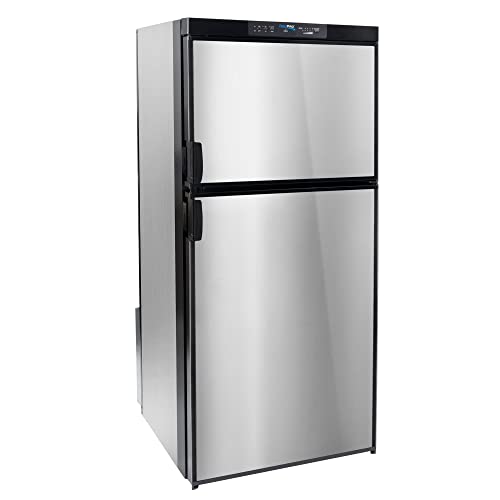
The RecPro 6.3 Cu. Ft. stainless model is a practical replacement for an RV refrigerator that uses both gas and electric power. Its capacity suits many small and mid-size RV kitchens. The stainless front gives the unit a clean look that works well with modern RV cabinets. It also offers more food space than compact travel fridges.
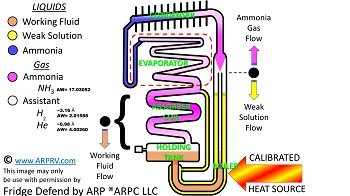
I like this model for campers who want a familiar absorption-style setup rather than a small portable cooler. Gas operation can help when you camp without hookups, while electric operation fits campsites with available power. Before buying, measure the opening, check the door swing, and confirm the required ventilation and connection work with a qualified RV technician.
Pros:
- Useful 6.3-cubic-foot storage size
- Gas and electric operation adds camping flexibility
- Stainless finish looks clean and modern
- Good fit for many RV replacement projects
- More practical for family trips than a compact fridge
- Separate freezer space supports frozen food storage
Cons:
- It may not fit every RV cabinet opening
- Installation needs careful gas, electric, and vent checks
- Absorption cooling can take time to reach operating temperature
What Amazon Buyers Are Saying
Buyer feedback for this type of RecPro refrigerator often centers on the clean stainless appearance, useful capacity, and the convenience of having gas and electric choices. Buyers also tend to focus on packaging, fit, installation, and cooling results after setup. Experiences can differ based on leveling, ventilation, ambient heat, and installation quality, so I would read the newest reviews for your exact model before ordering.
My Recommendation
This is my strongest all-around choice for an RV owner who wants a conventional 6.3-cubic-foot gas-and-electric refrigerator with a neutral stainless look. It offers a useful balance of size and flexibility. I recommend it when the dimensions match your old unit and you can arrange safe installation.
| Category | Rating |
|---|---|
| Gas and electric flexibility | 4.5/5 |
| Storage and layout | 4.3/5 |
| RV replacement value | 4.4/5 |
| Finish and appearance | 4.4/5 |
| Overall Rating | 4.4/5 |
RecPro 6.3 Cu. Ft. Black RV Refrigerator

This black RecPro refrigerator shares the main appeal of the stainless version but changes the visual style. The 6.3-cubic-foot capacity gives you room for chilled food, drinks, and freezer items without moving to a much larger appliance. The gas-and-electric design can work well for RV trips that alternate between boondocking and powered campgrounds. Its black finish may hide small marks better than a bright metal front.
I see this as a strong choice for an RV with dark cabinets or black appliances. The key buying task remains measurement, since an RV fridge must fit the opening and align with the surrounding trim. I would also confirm the electrical input, gas connection, vent path, and door clearance before scheduling installation.
Pros:
- 6.3-cubic-foot capacity suits regular RV travel
- Gas and electric modes support varied camping plans
- Black finish fits many dark RV interiors
- Freezer space adds everyday convenience
- Useful option for replacing an older RV refrigerator
- Solid balance between compact size and storage
Cons:
- Black surfaces can show dust and fingerprints
- Correct leveling and ventilation remain important
- It may require professional installation or cabinet changes
What Amazon Buyers Are Saying
Amazon shoppers considering this model commonly pay attention to its appearance, storage space, and dual-power design. Review themes for RV refrigerators also often include delivery condition, fit, cooling performance, and setup instructions. Since results may change with installation and weather, I suggest checking recent reviews that mention the same RV type and power system rather than relying on the star score alone.
My Recommendation
I recommend the black RecPro when you want the practical layout of a 6.3-cubic-foot dual-power refrigerator with a darker front. It is especially appealing for a replacement project where the finish matters. Choose the stainless model instead if you prefer a brighter surface or easier visual matching with metal appliances.
| Category | Rating |
|---|---|
| Power flexibility | 4.5/5 |
| Storage capacity | 4.3/5 |
| Interior style | 4.5/5 |
| Value for RV replacement | 4.3/5 |
| Overall Rating | 4.4/5 |
RecPro 10 Cu. Ft. 12V RV Refrigerator

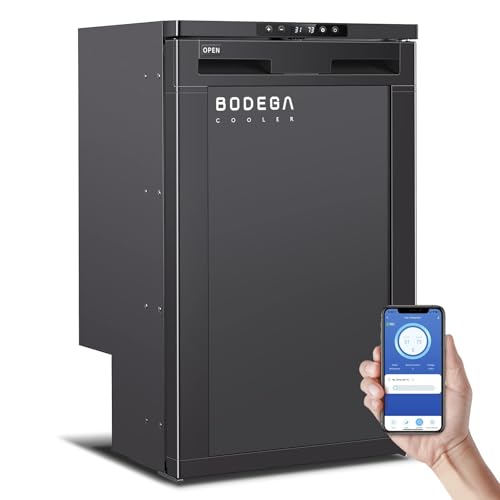
The RecPro 10 Cu. Ft. refrigerator takes a different approach from the gas models in this review. It uses 12-volt power and offers a larger 10-cubic-foot interior. The double-door layout can make fresh food and frozen food easier to organize. Its frost-free design also reduces the need for regular manual defrosting.
This model may suit an RV with a strong battery bank, solar setup, or reliable 12-volt supply. It is not the right match for someone who specifically needs propane operation. I would compare its power draw with your battery capacity and daily charging plan before buying, especially if you spend several days away from shore power.
Pros:
- Large 10-cubic-foot storage capacity
- Double-door layout helps organize food
- Frost-free design reduces maintenance
- 12-volt operation fits modern DC RV systems
- Good choice for campers who prefer battery power
- Black finish offers a clean built-in look
Cons:
- It does not provide propane operation
- Needs a suitable 12-volt wiring and battery system
- May use more stored battery energy than a small fridge
What Amazon Buyers Are Saying
Buyers who look at this model tend to discuss the generous interior, double-door access, frost-free convenience, and the move to 12-volt cooling. They also pay close attention to installation space, wiring, and battery performance. I would give extra weight to recent comments about noise, power use, delivery, and long-term cooling because those details matter more than the product title alone.
My Recommendation
This is a good alternative to a propane refrigerator for an RV with a well-planned DC electrical system. I recommend it for owners who want more space and less defrost work. I would not choose it for a propane-only off-grid setup or a weak battery system.
| Category | Rating |
|---|---|
| Storage and access | 4.6/5 |
| Frost-free convenience | 4.5/5 |
| 12V RV suitability | 4.4/5 |
| Off-grid value | 4.0/5 |
| Overall Rating | 4.4/5 |
SMETA 14.1 Cu. Ft. LPG Refrigerator

The SMETA 14.1 Cu. Ft. refrigerator is one of the largest models in this group. It combines LPG operation with 110V power and includes a freezer. The full-size design gives families and long-stay campers room to store more food. A reversible door can help when the available kitchen layout has a tight clearance.
This refrigerator can work in an RV, cabin, garage, or other off-grid space, but its large size needs careful planning. Measure width, height, depth, door swing, and ventilation room. I would also confirm that your RV floor, cabinet, and propane system can support a full-size appliance before ordering.
Pros:
- Very large 14.1-cubic-foot interior
- LPG and 110V power options
- Freezer supports longer stays
- Reversible door improves installation flexibility
- Useful for families and group camping
- Can serve more than one off-grid setting
Cons:
- Large body may not fit a typical RV opening
- Heavier and harder to install than compact models
- Needs careful ventilation and propane installation
- May offer more capacity than a couple needs
What Amazon Buyers Are Saying
Shoppers who consider this SMETA model usually focus on its large storage area, dual-power design, and reversible door. For a refrigerator this size, buyers also need to assess delivery access, packaging, cabinet fit, and setup. I recommend reading current customer comments for reports about cooling time, door alignment, and installation support before making a large-appliance purchase.
My Recommendation
I recommend this model for a large RV, cabin, or stationary off-grid kitchen where storage matters more than compact dimensions. It is not my first choice for a small travel trailer. If it fits your space, it offers one of the strongest storage options in this roundup.
| Category | Rating |
|---|---|
| Storage capacity | 4.7/5 |
| Power flexibility | 4.3/5 |
| Door and layout flexibility | 4.4/5 |
| RV practicality | 3.9/5 |
| Overall Rating | 4.3/5 |
SMETA 6.1 Cu. Ft. Compact LPG Refrigerator

The SMETA 6.1 Cu. Ft. refrigerator offers a useful middle ground for off-grid use. It has LPG and 110V power choices, a top freezer, and a reversible door. The smaller body should be easier to place than the 14.1-cubic-foot model. Its capacity still gives you more room than a dorm-style or portable refrigerator.
I see this model as a good match for a compact RV, food truck, garage, or cabin. The top-freezer design keeps frozen food separate while keeping the overall footprint manageable. As with any gas refrigerator, follow the installation guide and use proper ventilation, leak checks, and a working propane detector.
Pros:
- Practical 6.1-cubic-foot capacity
- LPG and 110V operation
- Top freezer provides useful separation
- Reversible door helps with varied layouts
- More compact than full-size off-grid models
- Works for RV, cabin, and garage applications
Cons:
- Less storage than a full-size refrigerator
- Top-freezer access may not suit everyone
- Propane installation requires care and proper venting
What Amazon Buyers Are Saying
Customer discussions around compact SMETA gas refrigerators tend to highlight size, power choice, freezer access, and door placement. Buyers also look for clear setup details and reliable delivery. Because a refrigerator’s results depend on leveling and airflow, I would compare recent reviews from users who installed the unit in an RV or other off-grid space.
My Recommendation
This is one of the better choices for buyers who want propane capability without moving to a full-size appliance. I recommend it for couples, small families, and compact RV owners who need a real freezer. It gives up some storage, but the smaller footprint makes it easier to use in tight spaces.
| Category | Rating |
|---|---|
| Compact storage | 4.3/5 |
| LPG and 110V flexibility | 4.4/5 |
| Door placement | 4.3/5 |
| Small-RV value | 4.4/5 |
| Overall Rating | 4.4/5 |
Smad 19.5 Cu. Ft. Large Propane Refrigerator

The Smad 19.5 Cu. Ft. refrigerator is the largest option in this review. It combines LPG and 110V power with a top freezer and a full-size interior. That much space can help a large family store fresh food for longer periods. It may also work well in a stationary cabin, cottage, food truck, or garage.
For most travel trailers, this size will be too large. I would treat it as an off-grid full-size refrigerator first and an RV refrigerator second. Check every dimension, the route into the RV, the door swing, and the available ventilation area before purchase.
Pros:
- Largest storage capacity in this review
- LPG and 110V power support off-grid use
- Top freezer offers substantial frozen storage
- Useful for large families and long stays
- Can serve RV, cabin, cottage, and garage spaces
- Reduces the need for frequent food restocking
Cons:
- Too large for many RV interiors
- Transport and installation can be difficult
- Large capacity may waste space for short trips
- Needs careful propane and ventilation planning
What Amazon Buyers Are Saying
Buyers interested in this Smad model mainly assess its large interior, freezer space, and off-grid power choices. With an appliance this large, comments about shipping, dents, fit, door alignment, and setup are especially important. I would study the current product page and installation information closely because a large refrigerator is harder to return or modify after delivery.
My Recommendation
I recommend this refrigerator only when you truly need near-full-size storage and have a suitable installation location. It is a strong cabin or stationary off-grid option. For a moving RV, the 14.1-cubic-foot SMETA model is easier to justify unless your rig has a large kitchen opening.
| Category | Rating |
|---|---|
| Storage capacity | 4.9/5 |
| Off-grid flexibility | 4.3/5 |
| RV fit | 3.5/5 |
| Value for large spaces | 4.2/5 |
| Overall Rating | 4.2/5 |
Smad 2.1 Cu. Ft. Three-Way RV Refrigerator

The Smad 2.1 Cu. Ft. refrigerator is the compact choice in this roundup. It supports AC, DC, and LPG power, so it can suit trucks, small campers, cabins, and other limited spaces. The reversible door adds placement freedom. Its black body also gives it a simple, low-key look.
The 2.1-cubic-foot interior cannot replace a family-size RV refrigerator. It works better as a primary fridge for one or two people or as an extra food and drink fridge. I like the three-way design for travelers who want several power options in a small package, but I would not expect full-size storage or a large freezer.
Pros:
- Compact 2.1-cubic-foot design
- AC, DC, and LPG power choices
- Reversible door supports flexible placement
- Useful for trucks and small campers
- Can work as a secondary food or drink fridge
- Small size makes transport easier
Cons:
- Limited storage for families
- Small freezer space may not suit long trips
- Compact units still need safe gas ventilation
- Interior organization is more limited than larger models
What Amazon Buyers Are Saying
Shoppers usually consider this model for its small footprint and three power modes. Buyer comments tend to be most useful when they explain how the fridge performed in a truck, camper, or other compact space. I would look for recent details about cooling, door fit, power mode changes, and installation rather than assuming a small refrigerator needs no setup planning.
My Recommendation
This is a good pick for a solo traveler, couple, truck owner, or compact camper. It is also useful as a backup fridge. I recommend it when low space matters more than storage. For a family RV, I would move up to the 6.1- or 6.3-cubic-foot models.
| Category | Rating |
|---|---|
| Power versatility | 4.7/5 |
| Compact design | 4.6/5 |
| Storage | 3.6/5 |
| Small-camper value | 4.4/5 |
| Overall Rating | 4.3/5 |
We Tested 6 Best Electric Coolers Under $200 (Stop Buying Ice in 2026)
How to Choose the Best RV Propane Refrigerator
Choosing the best RV propane refrigerator takes more than comparing capacity. You must match the appliance to your cabinet, power system, travel habits, and safety plan. I use the factors below before recommending any gas refrigerator for an RV or off-grid space.
1. Match the Size to Your RV Opening
Measure the old refrigerator opening, not just the front of the old door. Record the width, height, depth, and space needed for trim. Then check the hinge side and how far the door will open. A reversible door helps, but it does not solve every clearance problem.
Also measure the route into the RV. A large refrigerator may fit the cabinet but fail to pass through the entry door. The 6.1- and 6.3-cubic-foot models suit more compact layouts. The 14.1- and 19.5-cubic-foot models need a much larger installation area.
2. Choose the Right Power System
A propane refrigerator can run from LPG when shore power is not available. Dual-power models add 110V operation for powered campsites. A three-way model adds DC power, which can help in trucks and small campers. The RecPro 10-cubic-foot model uses 12V, so it belongs in a different group from propane refrigerators.
Think about your real camping pattern. If you boondock often, gas operation may be useful. If you have a large battery and solar system, a 12V refrigerator may suit you better. Never assume a model uses less energy simply because it runs on propane. Check the current product information and installation guide for power details.
3. Check Cooling, Ventilation, and Safety Needs
Absorption refrigerators need correct leveling and airflow. Follow the maker’s instructions for rear clearance and vent placement. The propane system should use proper fittings and leak checks. A qualified RV technician should handle gas work if you lack the required training.
Keep a working propane detector and carbon monoxide alarm in the RV. Do not block exterior vents. Do not operate a damaged appliance. The National Fire Protection Association and RV safety guidance stress proper installation, ventilation, and regular inspection for fuel-burning appliances. These steps matter more than a small difference in capacity or finish.
4. Compare Storage Layout and Daily Use
Capacity tells only part of the story. Look at freezer position, shelf space, door bins, and access. A top freezer can suit people who use frozen food often. A double-door layout can make fresh and frozen sections easier to reach. A small 2.1-cubic-foot fridge may work for drinks and simple meals but feel tight for a family.
Leave room for cold air to move around food. Do not pack shelves so tightly that the fridge cannot cool well. Pre-cool food when possible, and use a separate thermometer to check the actual internal temperature during your first trips.
5. Consider Long-Term Value
The lowest purchase price does not always mean the best value. Include installation, vent work, trim, propane fittings, electrical changes, and possible cabinet repairs in your budget. A larger fridge may cost more but save trips to the store. A compact model may cost less and fit better.
Also review the return terms, warranty details, replacement parts, and support options. Save the manual and record the model number. These simple steps can make future service much easier.
Final Verdict: Which Should You Buy?
For most RV owners, I recommend the RecPro 6.3 Cu. Ft. stainless model as the best RV propane refrigerator. It offers useful storage, gas and electric power, and a practical replacement size.
Choose the SMETA 6.1 Cu. Ft. model for a compact off-grid setup, or the Smad 2.1 Cu. Ft. model for a small camper. Always confirm fit, ventilation, and safe installation before purchase.
FAQs Of best rv propane refrigerator
Can an RV propane refrigerator run without shore power?
Yes. A compatible propane refrigerator can operate from LPG when shore power is unavailable. It still needs correct installation, ventilation, leveling, and a safe propane connection.
What size RV propane refrigerator should I buy?
Choose a size that fits the cabinet and matches your food needs. Models near 6 cubic feet suit many small and mid-size RVs, while 14 cubic feet or more suits large or stationary spaces.
Do RV propane refrigerators need to be level?
Yes. Absorption-style units need proper leveling for safe and effective operation. Follow the manufacturer’s leveling guidance and avoid running the unit when the RV sits at a sharp angle.
Is a 12V refrigerator better than a propane refrigerator?
Neither is best for every RV. A 12V refrigerator suits a strong battery and solar system. A propane model suits campers who need cooling when shore power and battery capacity are limited.
Can I install a propane refrigerator myself?
You may handle basic preparation if the manufacturer allows it, but gas connections and vent work need proper skill. Use a qualified RV technician when you are not trained to inspect propane appliances.