Can a Chrysler Pacifica Tow a Camper? (Weight Limits & Towing Guide)
Yes, a chrysler pacifica can tow a camper, but only if you have the specific model equipped with the factory towing package. The standard minivan without this extra equipment can’t pull anything heavier than a small bike rack or cargo carrier.
When properly equipped, the vehicle handles a maximum weight of 3,600 pounds. This number includes the camper itself plus all your gear, water, and supplies inside it. You must check your owner’s manual to confirm your exact build before hitching up, as guessing could damage the transmission or cause an accident on the highway.
How Much Can a Chrysler Pacifica Actually Tow
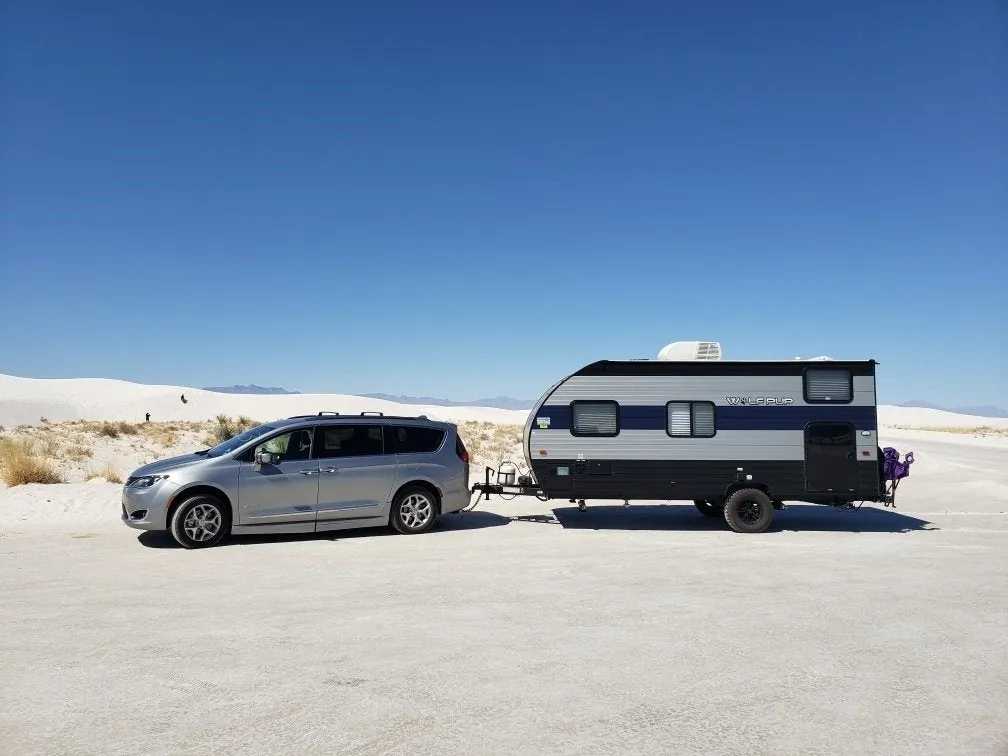
The chrysler pacifica has two very different limits depending on how it left the factory. Most people assume all minivans are the same, but that isn’t true for this vehicle. If your van has the official Trailer Tow Group installed, it pulls up to 3,600 pounds.
Without that group, the limit drops drastically to just 1,500 pounds, which means you can’t tow most campers. This huge difference exists because the cooling system and electrical wiring change completely between the two versions.
You need to know which version you own before buying any camping gear. The tow package includes a heavier-duty engine cooling system, a special wiring harness for trailer lights, and a hitch receiver built into the frame. These parts stop the engine from overheating when pulling a heavy load up a hill.
A standard pacifica lacks these upgrades, so pulling even a light camper could destroy the transmission in a single summer trip. Never assume your van is ready just because it looks like the pictures online.
| Model Configuration | Maximum Towing Weight | What You Can Pull |
|---|---|---|
| With Factory Tow Package | 3,600 lbs | Small travel trailers, pop-up campers, lightweight teardrops |
| Without Tow Package | 1,500 lbs | Small utility trailers, very lightweight campers |
| Hybrid Model (Any Trim) | 0 lbs | Nothing (towing is prohibited) |
The hybrid version of the chrysler pacifica can’t tow anything at all. Chrysler explicitly states that the hybrid battery placement and powertrain design make towing unsafe for this specific model. Even though it looks identical to the gas version on the outside, the internal mechanics differ significantly. Attempting to tow with a hybrid voids the warranty and risks serious mechanical failure. If you want to pull a camper, you must own the gasoline-only model with the correct equipment.
How Do I Know If My Van Has the Tow Package?
Identifying whether your vehicle has the necessary equipment is simple if you know where to look. Many owners buy used vans and never realize they lack the required hardware until they try to hitch a trailer. The most obvious sign is the square metal receiver hanging under the rear bumper.
If you see only a flat panel or a small hook for emergencies, you don’t have the tow package. That receiver must be a sturdy, rectangular tube bolted directly to the frame rails, not just the bumper cover.
Check under the hood for a larger radiator and additional cooling fans. The tow package requires extra cooling capacity to handle the heat generated by pulling weight. Open the driver door and look at the sticker on the edge. It lists the vehicle identification number and often notes the sales code for the tow group.
You can also call a dealer with your VIN to ask them to print the original build sheet. This document lists every single option installed when the car was new, leaving no room for doubt.
Warning: Never rely on the previous owner’s word alone. People often mistake a aftermarket hitch for the factory package, but those cheap hitches usually can’t handle 3,600 pounds safely.
The electrical connector is another key clue. Lift the flap on the rear bumper where the license plate sits. You should see a seven-pin round socket there. If you only see a four-pin flat plug or nothing at all, the wiring harness is missing. These physical checks give you the truth faster than guessing based on the trim level name.
Which Campers Fit Within the Weight Limit?
Finding a camper that stays under 3,600 pounds requires careful math, not just looking at the brochure weight. Manufacturers list the “dry weight,” which means the weight of the empty camper with no water, propane, or food inside. Once you fill those tanks and add your clothes, the real weight jumps significantly.
A good rule is to add 15% to the dry weight to estimate the actual loaded weight. If the dry weight is 3,000 pounds, your real towing load will be closer to 3,450 pounds, leaving very little room for error.
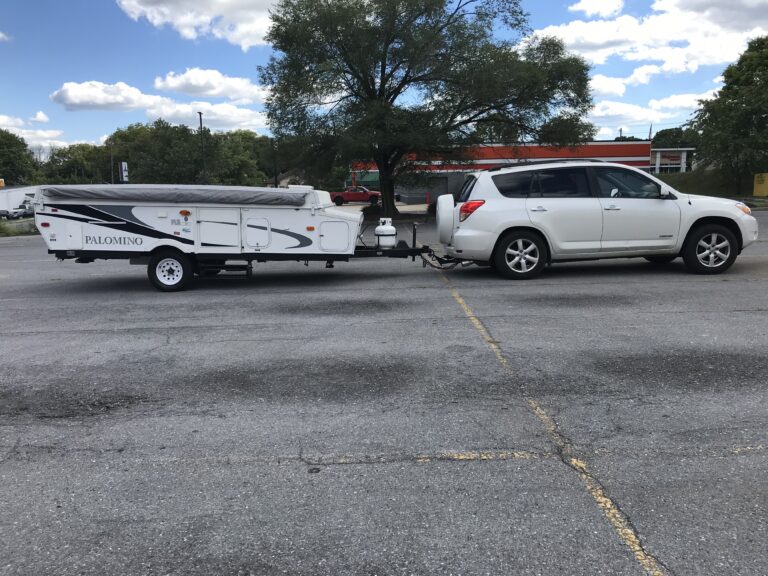
Pop-up campers are the safest choice for this minivan. They fold down low for storage and weigh much less than hard-sided trailers. Most pop-ups range from 1,500 to 2,500 pounds dry, which leaves plenty of margin for your gear. Teardrop trailers are another excellent option. Their compact size and aerodynamic shape reduce wind resistance, making them easier for a minivan to pull. You can find many teardrops under 2,000 pounds, giving you a comfortable safety buffer.
Small travel trailers work too, but you must be selective. Look for models specifically designed for light-duty towing. These often have single axles and lightweight construction materials like fiberglass or aluminum. Avoid anything with multiple axles or luxury features like large bathrooms and slide-outs, as these add too much mass.
Remember that the 3,600-pound limit includes everything attached to the hitch. If your tongue weight (the downward pressure on the hitch) exceeds 360 pounds, you’re over the limit even if the total weight is fine.
| Camper Type | Typical Dry Weight | Estimated Loaded Weight | Suitability for Pacifica |
|---|---|---|---|
| Pop-Up Tent Trailer | 1,500 – 2,200 lbs | 1,700 – 2,500 lbs | Excellent |
| Teardrop Trailer | 1,200 – 2,000 lbs | 1,400 – 2,300 lbs | Excellent |
| Small Travel Trailer | 2,500 – 3,000 lbs | 2,900 – 3,450 lbs | Good (Careful Loading) |
| Mid-Size Travel Trailer | 3,200+ lbs | 3,700+ lbs | Unsafe / Do Not Use |
| Hybrid Camper (Hard Ends) | 2,800 – 3,400 lbs | 3,300 – 3,900 lbs | Risky / Often Over Limit |
Always weigh your loaded camper at a truck scale before hitting the road. Guessing the weight leads to dangerous situations on steep grades. Drive onto a public scale with your van hitched to the camper. Ask the attendant for the separate weights of the axles and the tongue. This costs a few dollars but guarantees you’re legal and safe.
If the scale shows you’re over 3,600 pounds, you must remove items from the camper or choose a smaller unit. There’s no flexibility with this number; exceeding it stresses the brakes and suspension beyond their design limits.
Why Can’t the Hybrid Model Tow Anything?
The hybrid version can’t tow because the high-voltage battery pack occupies the space required for towing equipment. This physical conflict makes installing the necessary wiring and structural supports impossible without compromising safety systems.
The hybrid system also lacks the specific cooling circuits needed for sustained heavy loads. Towing generates immense heat in the drivetrain, especially when climbing hills or stopping frequently in traffic. The gas engine version has extra radiators and fans to dump this heat quickly. The hybrid relies on a different thermal management strategy optimized for fuel economy, not continuous high torque. Pulling a camper would cause the battery and motors to overheat rapidly, triggering a shutdown or causing permanent damage.
Attempting to tow with the hybrid goes against the manufacturer’s specifications and risks voiding related warranty coverage. The owner’s manual clearly states zero towing capacity for this variant. Insurance companies may deny claims if an accident occurs while towing with a vehicle rated for zero pounds.
It doesn’t matter how light the camper is; the restriction is absolute. If you need to tow, you must sell the hybrid and buy the gasoline model. There’s no aftermarket fix or software update that changes this fundamental engineering limitation.
What Gear Do I Need to Tow Safely?
Having the right van is only the first step; you also need the correct accessories to connect everything safely. The factory hitch receiver accepts a standard ball mount, but you must choose the right drop height.
Measure the height of your van’s hitch hole and the height of your camper’s coupler while both are on level ground. The trailer must sit perfectly level when connected. If the nose points up or down, the handling becomes unstable and dangerous. Buy an adjustable ball mount so you can fine-tune this height easily.
You need a weight distribution system if your camper approaches the 3,000-pound range. This device spreads the tongue weight across all wheels of the van and the trailer axles. It prevents the rear of the van from sagging, which keeps your headlights pointing forward instead of at the sky.
Sagging rear suspension also reduces steering control and braking efficiency. While not strictly mandatory for lighter loads, it makes the drive much smoother and safer for a minivan with a short wheelbase.
Brake controllers are essential for any camper over 1,500 pounds. Most states require independent trailer brakes once you pass this weight threshold. The factory wiring harness prepares your van for this, but you must buy and install the controller unit inside the cabin. This device lets you adjust how hard the trailer brakes push relative to the van’s brakes.
Set it too low, and the trailer pushes you from behind; set it too high, and the trailer wheels lock up. Test the settings in an empty parking lot before your first real trip.
Tip: Always carry a spare tire for the trailer, not just the van. Trailer tires fail more often than car tires due to sun exposure and long periods of sitting idle.
Check your tire pressures regularly on both vehicles. Under-inflated tires generate excessive heat and can blow out at highway speeds. The recommended pressure for towing is often higher than normal daily driving. Look at the sticker on your driver’s door jamb for the specific “cold tire pressure” numbers. Inflate the tires to the specific cold pressure listed on the driver’s door jamb sticker when carrying a heavy load. Proper inflation is the cheapest insurance against a roadside disaster.
Frequently Asked Questions
Can I Add a Tow Package to a Pacifica Later?
You can’t add the exact factory tow package after purchase because some components are installed during assembly, but complete aftermarket kits are available that include a receiver, wiring harness, and auxiliary cooling.
Does Towing Affect the Vehicle Warranty?
Towing within rated limits doesn’t void the warranty, but exceeding them will result in denied coverage for related failures. Chrysler tracks usage data to detect overstress. Keep detailed maintenance records, as frequent towing may require more frequent fluid changes.
Is It Safe to Tow in Mountainous Areas?
Yes, it’s safe if you manage speed and use lower gears, though the van will struggle on steep climbs. Use manual shift mode to keep engine RPMs high and prevent transmission overheating. Watch your temperature gauge and pull over immediately if it rises.
How Much Does a Real Camper Weigh With Gear?
A real camper usually weighs 15% to 20% more than its advertised dry weight once loaded with supplies. Water adds eight pounds per gallon, so a 20-gallon tank adds 160 pounds instantly. Always calculate total load based on fully packed weight.
What Happens If I Exceed the Towing Limit?
Exceeding the limit causes rapid transmission failure, brake fade, and potential loss of control. Transmission fluid boils and destroys internal clutches, while brakes can’t safely stop the combined weight. In a crash, insurance investigators will note the overload.
Can I Tow a Boat Instead of a Camper?
Yes, you can tow a boat as long as the total weight of the boat, motor, trailer, and fuel stays under 3,600 pounds. Boats create significant highway drag due to their wide fronts, increasing engine strain. Ensure the trailer has its own braking system.
Conclusion
If you plan to hit the road this weekend, double-check your VIN against the factory specs one last time. Confirm your tire pressure and test your trailer lights before merging onto the highway. Safe travels depend on knowing your exact limits and respecting them every mile of the journey.