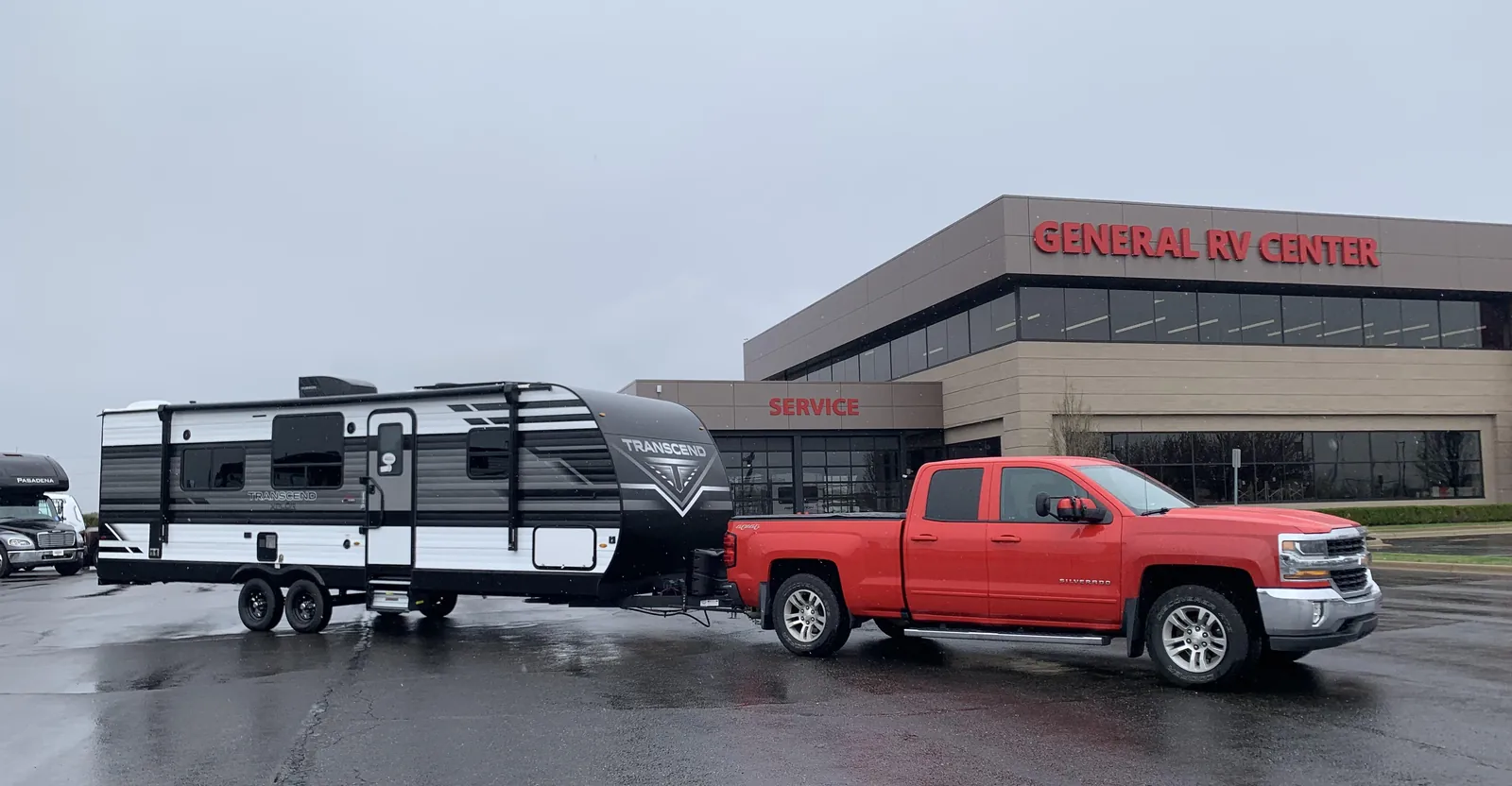
Can a Chevy Silverado 1500 Pull a Camper? (Towing Capacities Explained)
Yes, a Chevy Silverado 1500 can pull a camper, provided the trailer’s weight stays within the truck’s specific towing limits. Depending on the engine, cab configuration, and drivetrain, a modern Silverado 1500 typically offers a maximum towing capacity ranging from about 7,000 pounds to roughly 13,300 pounds.
This range comfortably covers most lightweight travel trailers, teardrop campers, and many mid-size fifth wheels, though you must always verify your exact truck’s rating before hitching up any load.
Key Takeaways
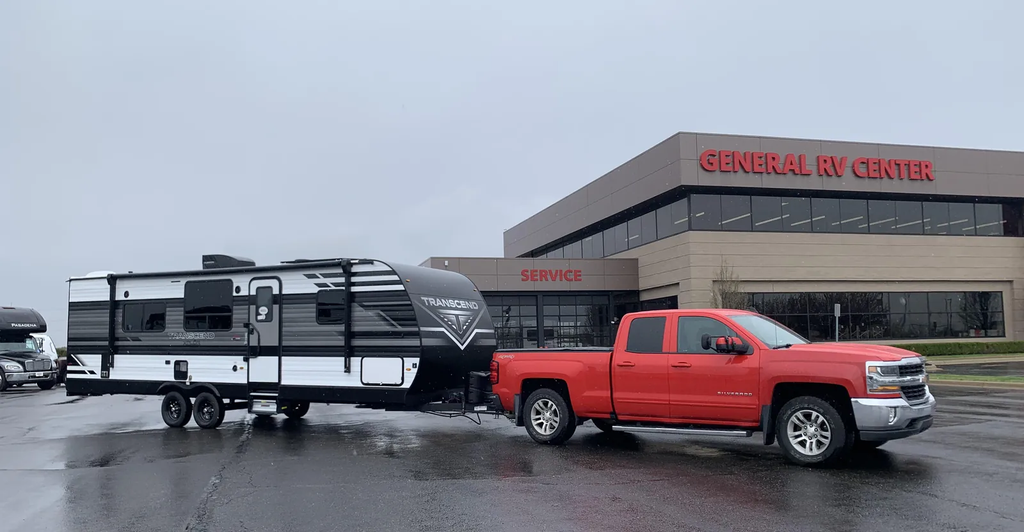
- The Silverado 1500 maxes out around 13,300 pounds of towing capacity when equipped with the available 6.2L V8 and the Max Trailering Package.
- Base engines like the 2.7L TurboMax or 4.3L V6 limit towing to roughly 7,000 to 9,600 pounds, restricting you to lighter pop-up or teardrop campers.
- Your truck’s payload capacity determines how much tongue weight and gear you can safely carry without overloading the rear axle.
- Always subtract the weight of passengers, fuel, and cargo from the maximum towing rating to find your actual safe towing limit.
- A factory-installed integrated trailer brake controller is essential for safely stopping campers weighing more than 3,000 pounds.
- Fifth-wheel and gooseneck campers require specific bed-mounted hitches that significantly alter the truck’s payload dynamics compared to standard bumper-pull trailers.
We Tested 6 Best Electric Coolers Under $200 (Stop Buying Ice in 2026)
Can a Chevy Silverado 1500 Pull a Camper?
A properly equipped Chevy Silverado 1500 handles most conventional travel trailers without breaking a sweat. The half-ton segment has evolved dramatically, and modern engineering allows these trucks to tow loads that previously required heavy-duty three-quarter-ton platforms. However, “properly equipped” is the critical phrase here.
A base-model work truck with a standard suspension will perform very differently from a High Country trim fitted with the Max Trailering Package. You need to match the camper type—whether it’s an Airstream Flying Cloud, a Jayco Jay Flight, or a Forest River R-Pod—to the specific mechanical capabilities of your truck. Exceeding the manufacturer’s limits risks severe damage to the transmission, brakes, and frame.
Understanding Towing Capacity Ratings
Towing capacity isn’t a single, universal number stamped on every Silverado 1500. It’s a calculated figure based on the powertrain, axle ratio, cooling systems, and suspension components. Chevrolet publishes these ratings based on SAE J2807 testing standards, which simulate real-world conditions including highway grades and emergency braking.
When evaluating your truck, you must look at the trailering guide for your specific model year. For example, the 5.3L EcoTec3 V8 paired with a 3.42 axle ratio provides a different rating than the same engine with a 3.23 ratio. Never rely on internet forums for your specific truck’s numbers; check the owner’s manual or the trailering placard located inside the driver’s door jamb.
Pro Tip: The maximum towing capacity assumes the truck contains only a 150-pound driver. Every additional passenger, toolbox, or cooler full of ice reduces the amount of weight you can legally and safely tow behind you.
Which Engine Handles Campers Best?
The engine under your hood dictates both your maximum pulling power and your comfort level on steep inclines. Chevrolet currently offers several powertrains for the Silverado 1500, each serving different towing needs. The turbocharged four-cylinder engines are surprisingly capable for light duty, but traditional V8s remain the preferred choice for larger travel trailers due to their sustained torque curves and long-term durability under heavy thermal stress.
| Engine Option | Typical Max Towing | Ideal Camper Type |
|---|---|---|
| 2.7L TurboMax I4 | ~9,600 lbs | Teardrops, Pop-ups, Small Travel Trailers |
| 5.3L EcoTec3 V8 | ~11,500 lbs | Mid-size Travel Trailers, Toy Haulers |
| 6.2L EcoTec3 V8 | ~13,300 lbs | Large Travel Trailers, Light Fifth Wheels |
| 3.0L Duramax Diesel | ~13,300 lbs | Long-distance Towing, Heavy Travel Trailers |
If you plan to tow a 30-foot camper like the Grand Design Imagine or a Coachmen Apex through mountain passes, the Duramax diesel or the 6.2L V8 will provide the necessary exhaust braking and low-end torque. The 2.7L TurboMax is perfectly adequate for weekend trips with a lightweight Lance 1475 or similar compact trailer.
Payload Versus Towing Limits Explained
Many truck owners focus entirely on towing capacity while ignoring payload, leading to dangerous overloading scenarios. Payload capacity refers to the total weight the truck itself can carry in its bed and cabin. This includes passengers, aftermarket bumpers, bed covers, and crucially, the tongue weight of the camper. Tongue weight is the downward force the trailer hitch exerts on the rear of the truck, typically accounting for 10 to 15 percent of the trailer’s total loaded weight.
If your Silverado 1500 has a payload rating of 1,800 pounds, and your family plus gear weighs 800 pounds, you only have 1,000 pounds remaining for tongue weight. This mathematically restricts you to a trailer weighing no more than 7,000 to 10,000 pounds fully loaded, regardless of what the maximum towing chart claims.
You can find your truck’s exact payload rating on the yellow and white sticker inside the driver’s side door frame. Always calculate this before purchasing a camper.
Calculating Your Real-World Limit
To determine your true safe towing limit, follow this sequence:
- Weigh your fully loaded truck (with passengers, fuel, and gear) at a commercial scale like a CAT Scale.
- Subtract that weight from your truck’s Gross Vehicle Weight Rating (GVWR).
- The remainder is your available payload for tongue weight.
- Divide that available payload by 0.15 (assuming 15% tongue weight) to find your realistic maximum trailer weight.
What Types of Campers Work Well?
Not all campers are built equally, and their aerodynamic profiles drastically affect how hard your Silverado 1500 works. A sleek, molded fiberglass trailer creates significantly less drag than a boxy, flat-fronted travel trailer. Choosing the right style ensures better fuel economy, reduced sway, and less strain on your transmission.
| Camper Category | Popular Examples | Dry Weight Range | Silverado Suitability |
|---|---|---|---|
| Teardrop / Compact | TAB 400, Scamp 13 | 1,200 – 2,500 lbs | Excellent for all engines |
| Lightweight Travel Trailer | Winnebago Micro Minnie, Airstream Bambi | 3,000 – 5,500 lbs | Great for 2.7L and V8s |
| Standard Travel Trailer | Jayco Jay Flight, Keystone Passport | 5,500 – 9,000 lbs | Requires V8 or Diesel |
| Half-Ton Towable Fifth Wheel | Grand Design Reflection 150, Coachmen Chaparral Lite | 8,500 – 11,500 lbs | Requires Max Trailering Package |
Fifth-wheel campers connect via a hitch mounted in the truck bed rather than at the rear bumper. While they offer superior stability and living space, they consume massive amounts of payload capacity because the pin weight sits directly over the rear axle. Only attempt to tow a fifth wheel if your Silverado 1500 has the highest available payload rating.
Essential Towing Equipment Required
Hooking a camper to a bare bumper ball is unsafe. Proper towing requires a suite of supporting equipment designed to distribute forces evenly across the truck’s chassis. A weight distribution hitch is mandatory for any travel trailer exceeding 5,000 pounds. Systems like the Equal-i-zer or Blue Ox SwayPro use spring bars to transfer tongue weight forward to the truck’s front axle, preventing the rear from sagging and the headlights from pointing into the sky.
Additionally, your truck must have an integrated trailer brake controller. Chevrolet offers this as a factory option, which communicates seamlessly with the truck’s anti-lock braking system. Aftermarket controllers from Tekonsha or Curt are alternatives, but factory integration is vastly superior for proportional braking. Ensure your wiring harness is a 7-pin connector, providing circuits for electric brakes, turn signals, running lights, and a 12-volt charge line for the camper’s battery.
Warning: Never exceed the gross combined weight rating (GCWR) of your vehicle. This figure represents the absolute maximum allowable weight of the truck, passengers, cargo, and trailer combined. Exceeding it compromises braking distances and structural integrity.
How Do You Check Your Truck Specs?
Locating your specific truck’s capabilities requires checking a few key identifiers. Open the glove box and look for the Service Parts Identification sticker. This document lists the Regular Production Option (RPO) codes that define your truck’s build. Look for code NHT, which indicates the Max Trailering Package, or GU6, which denotes a 3.42 axle ratio. These codes tell you exactly which column to reference in the official Chevrolet trailering guide for your specific model year.
Alternatively, visit a certified weigh station before your trip. Weighing the truck empty and then again fully loaded with your family and camping gear gives you precise data. Knowing your actual weights eliminates guesswork and prevents catastrophic overloading on the highway.
Safety Tips for Towing Campers
Driving a half-ton truck with a 7,000-pound trailer attached fundamentally changes vehicle dynamics. Stopping distances increase dramatically, and crosswinds can push the rig out of its lane if you’re unprepared. Always leave double the following distance you would normally maintain in passenger traffic. When descending steep grades, manually downshift the transmission to utilize engine braking rather than riding the physical brake pads, which will quickly overheat and fade.
Before leaving the driveway, perform a comprehensive walk-around inspection. Verify that all marker lights function, the breakaway cable is securely attached to the truck frame (not the safety chains), and the hitch pins are locked.
Check tire pressures on both the truck and the camper when the tires are cold. Underinflated trailer tires are the leading cause of blowouts and subsequent rollovers. Consider installing a tire pressure monitoring system specifically designed for RV applications, such as those made by TireMinder or TST.
Pro Tip: Practice backing up your camper in an empty parking lot before attempting tight maneuvers at a crowded campground. Place your hand at the bottom of the steering wheel; moving your hand left makes the trailer go left, and vice versa.
Frequently Asked Questions
What size camper can a Silverado 1500 pull?
A Silverado 1500 can generally pull campers ranging from small 1,500-pound teardrops up to 35-foot travel trailers weighing around 11,000 pounds, depending on the engine and trailering package. Always verify your specific truck’s payload and towing limits before purchasing a camper to ensure safe operation.
Does the Silverado 1500 need a weight distribution hitch?
Yes, Chevrolet strongly recommends using a weight distribution hitch for any conventional trailer weighing over 5,000 pounds. This equipment levels the ride height, restores steering control to the front axle, and significantly reduces dangerous trailer sway during highway driving or high winds.
Can a 5.3L Silverado 1500 tow a fifth wheel?
While technically possible with certain ultra-light fifth wheel models, it’s rarely recommended. Fifth wheels place heavy pin weight directly on the rear axle, often exceeding the 1500 series payload capacity. A 2500HD or 3500HD truck is much safer and better suited for fifth wheel towing.
How much does towing reduce Silverado fuel economy?
Towing a moderately sized camper typically cuts a Silverado 1500’s fuel economy in half. If your truck averages 20 miles per gallon unloaded, expect between 9 and 12 miles per gallon while towing. Aerodynamic drag from boxy travel trailers causes the most significant fuel consumption increases.
Is the 2.7L turbo engine good for towing campers?
The 2.7L TurboMax engine is excellent for lightweight campers, pop-ups, and small travel trailers under 7,000 pounds. Its high torque output at low RPMs makes it surprisingly capable. However, for large, heavy travel trailers or frequent mountain driving, the V8 or diesel options provide better longevity and thermal management.
Where do I find my truck’s exact towing capacity?
Check the trailering placard located inside the driver’s side door jamb or consult the owner’s manual. You can also decode your glovebox RPO stickers to identify your axle ratio and trailering packages, matching them against the manufacturer’s official specifications for your model year.
Conclusion
Your immediate next step should be to locate the payload sticker inside your driver’s door and weigh your fully loaded truck at a nearby commercial scale. Once you know your exact available payload, you can confidently shop for a camper that keeps your Silverado 1500 operating safely within its engineered limits.