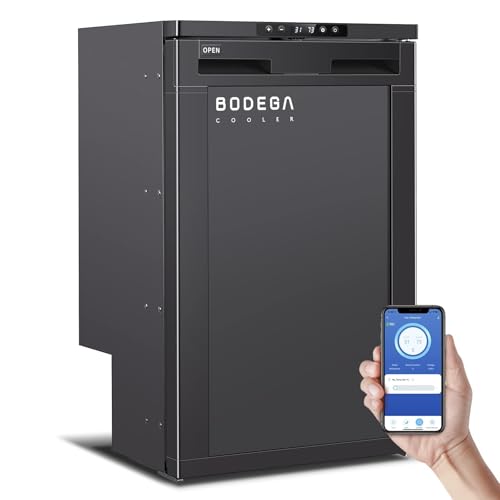
7 Best Small 12v Compressor Fridge for Campervan Picks: Keep Your Food Cold Off-Grid
The ICECO GO20 Dual Zone earns the top spot with its genuine SECOP compressor, durable anti-bump design that operates at up to 40-degree angles, and independent twin cooling compartments. Finding the best 12v compressor fridge for campervan travels comes down to how much space your build offers, how you manage off-grid power, and whether you need actual freezing alongside everyday food chilling.
The biggest split between these models sits between chest-style units, built-in cabinet boxes, and compact drawer units. Some options bring their own battery packs to run parked off-grid, while others rely strictly on your vehicle’s house wiring. This guide outlines how these seven distinct picks handle layout limits, temperature control, and everyday van life demands.
| # | Product | Best for | Price |
|---|---|---|---|
| 1 | ICECO GO20 Dual Zone | Best Overall | Check price on Amazon |
| 2 | BougeRV CRD2 V2 | Best Battery Integrated | Check price on Amazon |
| 3 | Dometic DMC4101 | Best Built-in Design | Check price on Amazon |
| 4 | VEVOR 58 Qt Dual | Most Spacious Capacity | Check price on Amazon |
| 5 | Dometic CoolMatic CD 30 | Best Low-Profile | Check price on Amazon |
| 6 | VEVOR 21.1 QT Portable | Best Lightweight | Check price on Amazon |
| 7 | Smad 1.7 cu.ft | Best Compact Upright | Check price on Amazon |
1. ICECO GO20 Dual Zone 12V Refrigerator

Best for: Campers wanting reliable sub-zero freezing and independent cooling compartments.
The ICECO GO20 Dual Zone features an authentic SECOP compressor. It cools to 0°F and handles rough terrain.
Inside, the box features a removable divider that shifts the interior layout between a single large zone and two independently controlled spaces. Two digital control readouts let you keep frozen meat solid on one side while holding leafy greens above freezing on the other. You can also run the fridge using an app, which saves you from crawling into the back of your van to adjust temperatures. Power inputs support 12V and 24V DC vehicle outlets, plus 110V to 240V AC shore power cords.
- Pros:
- Reliable SECOP compressor with fast-cooling mode
- Dual digital controllers for separate zone temperatures
- Handles vehicle tilt angles up to 40 degrees
- Removable divider switches between single and dual compartments
- 5-year warranty protection on the compressor
- Cons:
- At 21 quarts, anyone packing food for family trips will run out of room quickly
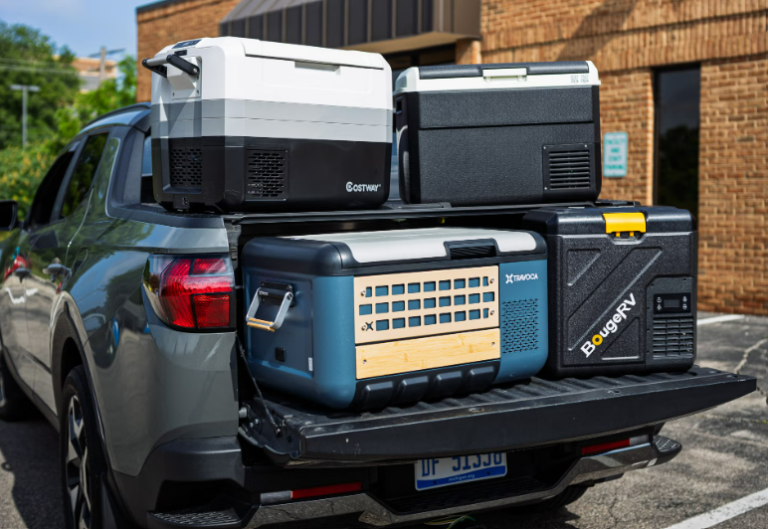
2. BougeRV 12V Refrigerator with 240Wh Battery CRD2 V2 43QT

Best for: Van lifers wanting untethered cooling away from vehicle power.
The BougeRV CRD2 V2 keeps food chilled away from vehicle power. It includes a detachable 240Wh LiFePO4 battery that docks without wires. This battery delivers up to 20 hours of runtime.
Transporting the loaded cooler is manageable thanks to built-in wheels and a pull-out telescopic handle. Inside, you get 43 quarts of total volume divided into two independent compartments that adjust anywhere from -4°F to 68°F. That wide spread allows you to configure either compartment as a deep freeze or standard refrigerator. Internal LED lights help you locate snacks late at night, and two wire baskets lift out smoothly for fast loading. Wireless control reaches up to 32 feet through a smartphone app, letting you monitor real-time temperatures from your camp chair.
- Pros:
- Included 240Wh detachable LiFePO4 battery
- Independent dual zones chilling between -4°F and 68°F
- Telescopic handle and heavy-duty wheels
- Internal LED lighting and removable wire storage baskets
- App connectivity works up to 32 feet away
- Cons:
- Telescoping handle and wheel assembly make it bulky for tightly boxed cabinets
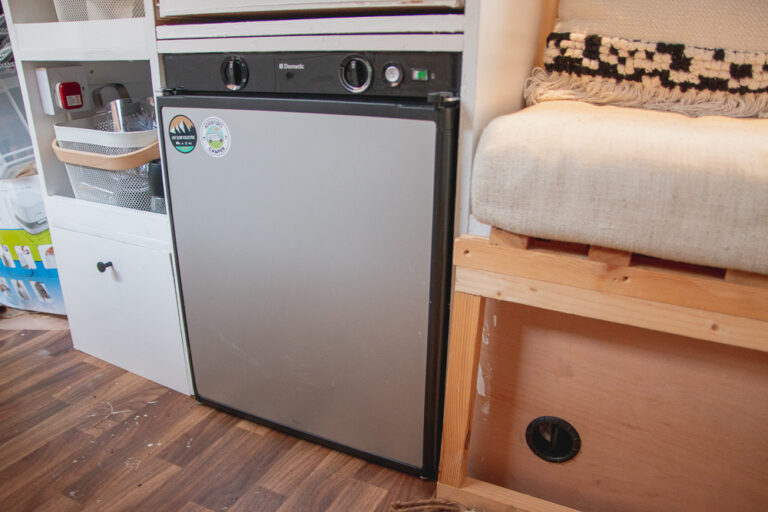
3. Dometic DMC4101 10 Cu. Ft
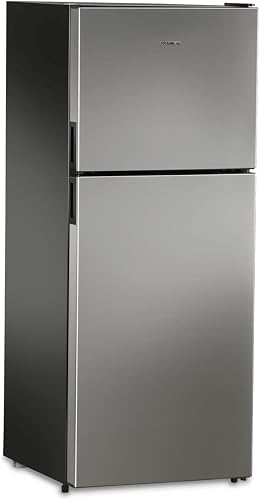
Best for: Large van builds needing full-size upright kitchen food storage.
The Dometic DMC4101 brings residential refrigerator utility into a vehicle platform by delivering 10 cubic feet of upright interior space. Unlike chest-style coolers that force you to dig past frozen items to reach something at the bottom, this tall design features shelves and door storage. A tough metal exterior, secure positive-latching handles, and heavy hinges ensure the door stays sealed when your campervan rounds sharp corners.
This unit runs strictly on a 12V DC compressor circuit using R134a refrigerant, designed to operate efficiently in hot weather while drawing minimal current from your house battery bank. Its integrated automatic temperature control actively monitors interior ambient conditions to balance internal cold levels without constant user tinkering. Dometic also specifies quiet compressor mechanics, which is a major benefit if your bed platform sits right beside your galley kitchen.
- Pros:
- Massive 10 cubic foot upright interior volume
- Durable metal housing with road-ready hinges and latches
- Automatic temperature control adapts to changing van temperatures
- Built specifically for quiet mobile operation near sleeping areas
- Dedicated 12V DC compressor system
- Cons:
- Demands a tall, full-height cabinet cutout that rules out smaller camper conversions
4. VEVOR 58 Qt Dual
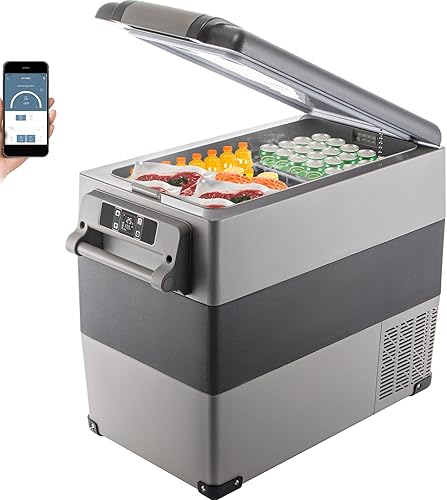
Best for: Extended off-grid road trips needing substantial food and drink capacity.
The VEVOR 58 Qt Dual provides 58 quarts of storage, the most in this lineup. It holds 60 cans, 36 water bottles, or 18 wine bottles. If you travel with a partner or head into backcountry routes for days at a time, this cooler holds ample fresh perishables alongside several drink packs.
Cooling reaches from -4°F to 68°F via an onboard compressor, controlled through a clean LED digital panel or an integrated Bluetooth smartphone connection. It runs on 12V or 24V vehicle power outlets as well as standard 110V to 240V wall current. It also includes an integrated three-stage battery guard with low, medium, and high cutoff levels. This circuit cuts off power draw before your camper’s starter or auxiliary battery drains completely flat.
- Pros:
- Generous 58-quart storage capacity
- Three-level battery protection guards against dead vehicle batteries
- Wide cooling range from -4°F to 68°F
- Integrated Bluetooth for remote phone adjustments
- Runs on 12/24V DC and 110-240V AC power supplies
- Cons:
- Internal zones share a single control system, preventing independent dual-zone temperatures
5. Dometic 9600001127 CoolMatic CD 30 Low-Profile Compressor Refrigerator 1 cu.

Best for: Stealth campers and micro-vans with limited floor area.
The Dometic CoolMatic CD 30 rethinks camper cooling by utilizing a sliding drawer layout instead of a top-opening lid or tall swing door. With a compact interior capacity, this low-profile black drawer installs flush beneath a dinette bench, inside a shallow galley box, or under a converted bed frame. By sliding straight out on metal rails, it allows quick access to chilled food without requiring open clearance above the unit.
Operating exclusively on DC power systems, the CD 30 uses an integrated compressor designed for mobile use. Its sleek black front panel blends into modern camper interiors without drawing attention. The flat form factor keeps items steady in shallow organizers, ensuring condiments and drinks don’t tip over while driving down winding switchbacks.
That low-clearance design comes at the expense of raw storage space. You’ll have to store tall bottles horizontally and limit your grocery supplies to basic essentials.
- Pros:
- Pull-out drawer format tucks under seats and beds
- Extremely low profile fits tight spots where top-load lids can’t open
- Efficient DC compressor mechanics built for vehicle setups
- Clean, discreet black faceplate
- Slides open smoothly on heavy-duty drawer runners
- Cons:
- Limited to a small interior capacity, ruling out tall bottles and bulky grocery containers
6. VEVOR 21.1 QT Portable

Best for: Solo travelers needing a featherweight cooler that’s easy to move.
The VEVOR 21.1 QT Portable focuses on keeping physical weight to an absolute minimum by utilizing high-density Expanded Polypropylene (EPP) foam for its primary body. This tough material absorbs vehicle vibration, shrugs off impact cracking, and makes the empty cooler exceptionally easy to lift. It even comes packaged with an external fabric storage bag that adds protection and extra utility during camping trips.
Despite its lightweight build, the unit houses a capable compressor that drops from 68°F to 32°F in 18 minutes. It offers an operating temperature span between 14°F and 50°F, accommodating refrigeration or basic freezing tasks. A built-in 3-level battery monitor actively prevents your vehicle power bank from draining too low. You can configure settings through a digital screen or manage it wirelessly over Bluetooth using a companion smartphone application.
- Pros:
- Ultra-lightweight EPP foam body resists cracks and vibration
- Drops from 68°F to 32°F in roughly 18 minutes
- Integrated three-level battery guard protects camper electrics
- Useful protective fabric storage bag included in the box
- Supports app-based wireless temperature adjustments
- Cons:
- Temperature floor bottoms out at 14°F, ruling out true sub-zero deep freezing
7. Smad 12V RV Refrigerator 1.7 cu.ft
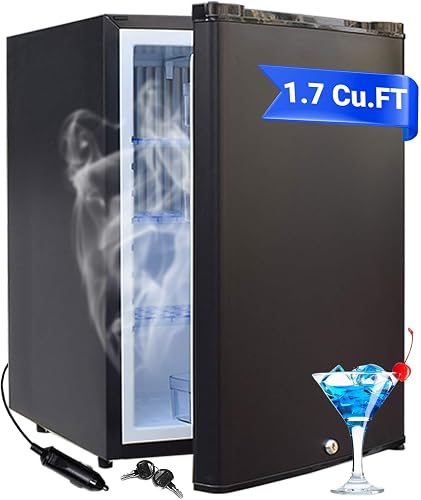
Best for: Campers wanting dead-silent operation inside compact sleeper vans.
The Smad 1.7 cu.ft refrigerator takes a unique approach compared to standard mechanical units by employing an absorption cooling loop. Because it lacks a mechanical compressor, it operates silently at under 10dB. That near-total silence is a major perk for light sleepers resting in compact campers where every hum sounds loud.
This mini-fridge runs on dual electrical inputs, supporting 12V DC vehicle circuits and standard 110V AC wall outlets. The door features a key lock for security and a reversible hinge for flexible installation. Inside, you get 1.7 cubic feet of volume with adjustable wire shelving.
- Pros:
- Virtually silent absorption operation under 10dB
- Front key-lock prevents doors popping open while driving
- Reversible door fits custom galley layouts
- Operates on both 12V DC and 110V AC power
- Removable interior shelving for flexible packing
- Cons:
- Temperature range only reaches 32°F to 50°F, ruling out frozen food storage entirely
Also Worth Considering
The BODEGA Volt Portable Car Refrigerator provides a 53-quart single-zone chest design suited for weekend campers wanting a basic wide-open cooler tub. It’s beaten out by the VEVOR 58 Qt Dual, which supplies more room at 58 quarts along with divided internal storage compartments.
The TaskStar Volt Portable Car Refrigerator packages a 26-quart (25L) capacity with two 4.0Ah batteries, supporting temperatures from -4°F to 68°F.
The 10 Best Camping Fridge for Van Life, Overlanding, and Car Camping
How We Chose
48 Amazon listings were compared on compressor types, interior volume capacities, and power compatibility, and near-duplicates — another colour, another size of one already here — were left out. To make this shortlist, a product listing had to clearly state its DC voltage ratings, temperature ranges, and overall storage layout. Models spanning small drawers, large upright cabinets, and battery-ready coolers were selected to address the wide variety of modern campervan floor plans.
Choosing the Best 12v Compressor Fridge for Campervan
Physical dimensions and cabinet clearance
Start by measuring your camper’s available floor area, counter depth, and vertical cabinet clearance. Drawer designs like the Dometic CoolMatic CD 30 slide smoothly out from under seats, whereas upright cabinets like the Dometic DMC4101 demand tall, dedicated wall space. Chest fridges need sufficient overhead clearance so the top lid can open fully without hitting your bed platform.
Internal storage volume and zoning
Match your cooler capacity to how many days you spend between grocery runs. Solo weekenders get along fine with 21 quarts inside the ICECO GO20 Dual Zone, while couples on extended trips need the 58-quart tub of the VEVOR 58 Qt Dual. If you want ice cream alongside fresh produce, pick true independent dual zones over single-control split compartments.
Battery protection and power sources
Look closely at the electrical input ratings and low-voltage protection systems listed on the box. Units like the BougeRV CRD2 V2 pack their own lithium batteries, while others run straight from vehicle wiring. Built-in three-level battery guards prevent the cooler from draining your vehicle battery beyond recovery, safely cutting off power draw before you get stranded off-grid.
Safe food storage temperatures
Camper fridges must hold temperatures low enough to prevent bacteria growth. The U.S. Food and Drug Administration recommends keeping refrigerator temperatures at or below 40°F (4°C) to safely preserve perishable food.
Frequently Asked Questions
Can these 12V compressor fridges run while the vehicle is driving?
Yes, models like the ICECO GO20 Dual Zone are engineered specifically for travel, featuring anti-bump compressors that operate steadily on inclines up to 40 degrees. Heavy-duty latches on models like the Dometic DMC4101 ensure the doors stay securely closed when driving over rough washboard surfaces.
What is the advantage of a compressor fridge over an absorption model?
Compressor units drop temperatures faster and pull food down to true sub-zero freezing levels. For example, the BougeRV CRD2 V2 reaches -4°F, while the absorption-based Smad 1.7 cu.ft bottoms out at 32°F. However, absorption models run almost silently without any mechanical motor noise.
How does three-stage battery protection work on camper fridges?
The battery protection circuit monitors the incoming voltage from your vehicle’s 12V battery system. As seen on the VEVOR 58 Qt Dual, users can select low, medium, or high cutoffs. The fridge stops drawing power once vehicle voltage dips below the selected safety limit, keeping enough charge to start the engine.
Can I run a 12V camper fridge from a standard household wall outlet?
Most units in this guide ship with both 12V DC and 110V/240V AC adapters. Models like the ICECO GO20 and BougeRV CRD2 V2 plug directly into household outlets, allowing you to pre-chill groceries before loading them into your van.
Why does an absorption fridge require inversion before installation?
The Smad 1.7 cu.ft listing states the unit must sit upside down for two hours, then upright for two hours before you run it. Absorption cooling loops rely on gravity and a balanced chemical mixture rather than a mechanical pump. Setting the fridge upside down releases air pockets and distributes the internal coolant evenly through the back piping coils.
How does dual-zone single control differ from independent dual-zone control?
The VEVOR 58 Qt Dual has dual compartments governed by one central temperature dial, meaning both sides share the same baseline chill. In contrast, the ICECO GO20 Dual Zone and BougeRV CRD2 V2 use separate digital controllers for each section. That lets you hold one side at 0°F for meat while keeping the opposite side at 38°F for milk.
Can a 12V portable fridge operate without being plugged into the vehicle?
The BougeRV CRD2 V2 includes a 240Wh detachable LiFePO4 battery that powers the compressor for up to 20 hours under certain conditions. Other standard DC units, like the ICECO GO20 Dual Zone or VEVOR 21.1 QT Portable, require a continuous connection to your campervan house battery bank or an active 12V vehicle socket.
What causes a compressor fridge to shut off unexpectedly when parked?
The three-stage battery monitors on units like the VEVOR 58 Qt Dual and VEVOR 21.1 QT Portable shut down cooling if input voltage drops below a preset threshold. If your camper battery voltage sags under heavy loads, switching the internal guard setting from “High” to “Medium” or “Low” allows the compressor to keep running.
How do drawer-style fridges vent heat inside tight cabinet enclosures?
Low-profile slide units like the Dometic CoolMatic CD 30 house their compressor mechanics at the back of the sliding frame. Heat expels into the surrounding cabinet cavity during active cooling cycles. Installing these units requires leaving clear ventilation space around the rear enclosure so the condenser coils stay cool.
Is an EPP foam exterior durable enough for rough van travel?
The VEVOR 21.1 QT Portable uses Expanded Polypropylene (EPP) construction, which absorbs mechanical vibration without cracking or splintering. The material offers high impact resistance while keeping overall chassis weight minimal for hand carrying. The package also includes a protective fabric slipcover to prevent scuffs during daily outdoor loading.
What should you do if your camper fridge builds up internal frost?
Compressor models running down to sub-zero levels, such as the BougeRV CRD2 V2 reaching -4°F, naturally freeze ambient moisture when opened in humid weather. To clear ice build-up, power off the unit, unplug the DC cord, and allow the interior walls to thaw completely before wiping the floor dry with a towel.
Does running a 12V fridge on an incline damage the compressor?
Standard residential refrigerators fail when tilted, but mobile compressor fridges handle dynamic movement. The ICECO GO20 Dual Zone features an anti-bump SECOP compressor built to work stably at tilt angles up to 40 degrees. That tolerance prevents internal mechanical binding and oil starvation when climbing steep mountain grades.
Can mobile compressor fridges run on 24V electrical systems?
Yes, the ICECO GO20 Dual Zone, BougeRV CRD2 V2, VEVOR 58 Qt Dual, and VEVOR 21.1 QT Portable all support native 12V and 24V DC inputs. Their internal control boards automatically detect the incoming voltage, allowing direct plug-and-play operation in both 12V campervan builds and 24V heavy-duty overland truck platforms.
How far away does smartphone app control work on mobile coolers?
Wireless ranges depend on the onboard transceiver built into each unit. The BougeRV CRD2 V2 listing specifies operational app control at distances up to 32 feet away via a wireless signal. This allows you to check compartment temperatures, adjust cooling levels, and switch off power directly from your campsite seating area.
What keeps upright fridge doors from flying open during travel?
Upright camper refrigerators use dedicated positive-locking latches or key mechanisms to stay shut on bumpy roads. The Dometic DMC4101 uses road-tested mechanical handles and rugged hinges designed for mobile stress. The Smad 1.7 cu.ft features a physical front key lock to physically prevent the door from swinging open on sharp turns.
Does an upright RV fridge require special wall bracing?
A full-size cabinet unit like the 10 cu. ft. Dometic DMC4101 requires secure anchoring to the structural framing of your van. Its heavy metal exterior and tall profile create substantial leverage while cornering. Fastening the side flanges directly into structural cabinet studs keeps the appliance completely rigid when driving over uneven ground.
How do removable baskets improve daily cooler organization?
Chest coolers like the BougeRV CRD2 V2 come equipped with drop-in wire baskets that separate fragile produce from heavy canned beverages beneath. These wire baskets allow you to lift out all your fresh food in one go when searching for items stored at the very bottom, eliminating the need to unpack every loose item individually.
What is the advantage of a low-profile drawer over a top-opening chest fridge?
The Dometic CoolMatic CD 30 drawer pulls straight out on metal slides, requiring zero vertical clearance above the unit. Top-loading chest fridges need substantial overhead space to swing their lids open, which often forces builders to mount them on heavy slide-out trays inside low benches or gear garages.
Why do some listings specify R134a refrigerant?
Refrigerant types dictate operating pressures and heat transfer efficiency. The Dometic DMC4101 specifies R134a refrigerant paired with its high-efficiency mobile compressor. This formulation allows the unit to sustain reliable internal cooling even when ambient temperatures climb inside an uninsulated van parked directly under hot summer sunlight.
Can you store glass wine bottles upright in a portable chest cooler?
Internal tub depth dictates what containers fit vertically. The VEVOR 58 Qt Dual provides enough vertical wall clearance to hold up to 18 standard 750 ml wine bottles standing upright. Smaller designs, such as the Dometic CoolMatic drawer, lack vertical clearance and require bottles to lie flat.
How long is the factory power cord on mobile 12V refrigerators?
Cord lengths vary by manufacturer, but most mobile units provide enough reach to route from a rear cargo area to a 12V dashboard socket. The ICECO GO20 Dual Zone listing states it includes a 2.5m DC cigarette lighter cord alongside its AC household power adapter, allowing flexible placement across camper layouts.
What maintenance does a 12V compressor fridge require in a van?
Routine maintenance focuses on keeping airflow vents clear and cleaning door gaskets. Dust and pet hair pulled into compressor vents restrict heat dissipation, causing the motor to cycle more frequently. Wiping down the rubber seals on units like the Dometic DMC4101 prevents air leaks that lead to excess frost buildup.
Will a 12V compressor fridge drain a starter battery overnight?
Running a fridge directly from an unmonitored starter battery can leave your vehicle stranded. Models like the VEVOR 58 Qt Dual and VEVOR 21.1 QT Portable feature three-level battery guards that cut off current before the vehicle battery reaches a flat state, protecting the electrical reserves needed to crank the engine.
Can an absorption fridge freeze food during summer travel?
Absorption cooling loops struggle to achieve steep temperature deltas in hot environments. The Smad 1.7 cu.ft operates within a specified range of 32°F to 50°F, which keeps beverages cold and prevents dairy spoilage. However, it can’t achieve sub-zero temperatures, making it unsuitable for freezing meat or keeping ice cream solid.
How does internal LED lighting operate in dual-zone coolers?
Compartment lighting helps locate food in dark van interiors without needing a flashlight. The BougeRV CRD2 V2 integrates independent interior LED lights into each separate zone. These LEDs switch on automatically when a compartment lid opens, illuminating the removable baskets so you can grab items without disturbing sleeping passengers.
What does an ETL certification mean on a portable camper fridge?
The ICECO GO20 Dual Zone carries an ETL certification mark, which indicates the appliance was tested to conform to recognized North American electrical safety standards. This verification confirms that the compressor electrical circuits, power supplies, and wiring insulation meet strict requirements for fire safety and consumer electrical protection.
Can you power a 12V camper fridge from an external portable power station?
Yes, any mobile fridge equipped with a standard 12V/24V DC cigarette plug operates smoothly from the regulated DC port of a portable power station. Models like the ICECO GO20 Dual Zone draw efficient continuous DC power without wasting the extra electrical energy lost when using an inverter.
What happens if you run a dual-zone fridge with the divider removed?
The ICECO GO20 Dual Zone features an automatic sensor that detects when you pull out the internal divider. Removing the partition merges the two separate compartments into a single large 21-quart chamber. The internal electronic controls automatically switch from dual-zone monitoring over to single-zone temperature regulation.
Why does a compressor fridge cycle on and off periodically?
Compressors regulate internal temperatures using an internal thermostat. Once the cabinet reaches your target temperature, the motor shuts off to conserve power. When internal air temperatures rise a few degrees, the compressor kicks back on to pull the temperature down, cycling automatically throughout the day.
Can you use a 12V compressor fridge as a household bar cooler?
Every portable model featuring AC and DC dual-voltage inputs can function indoors. The ICECO GO20 Dual Zone and BougeRV CRD2 V2 include standard AC household adapters in the box. Plugging the adapter into a 110V wall outlet lets you run the cooler in an office, bedroom, or patio.
Does an upright 12V fridge require a separate inverter?
The Dometic DMC4101 runs directly from a native 12V DC power feed, eliminating the need for an AC power inverter. Connecting directly to your campervan 12V house batteries avoids the 10% to 15% electrical conversion loss typical of running residential AC appliances through an inverter.
How does cold air loss compare between drawer fridges and upright fridges?
Cold air sinks, so upright fridges like the Dometic DMC4101 spill chilled air across the van floor whenever the front door swings open. Pull-out drawers like the Dometic CoolMatic CD 30 keep cold air trapped within the sliding tub, reducing interior heat gain when reaching for drinks.
What should you do if the fridge display shows an error code?
Digital control panels display error codes when the supply voltage drops or the compressor overheats. On units like the VEVOR 58 Qt Dual, an error usually points to an activated battery guard. Checking your 12V DC wire connections and measuring battery voltage typically resolves the alert.
Can road vibrations loosen the door hinges on mobile fridges?
Vehicle vibrations can stress standard hardware, which is why purpose-built mobile fridges use reinforced hinge assemblies. The Dometic DMC4101 uses heavy-duty mobile hinges built to withstand sustained washboard vibration, preventing the door from sagging or losing its airtight magnetic seal over years of travel.
Compressor fridge, in short
Choosing the right cooling system makes your time on the road much more comfortable. Once you’ve measured your van’s available floor space and checked your battery capacity, you’ll be ready to pick a reliable model. Don’t wait until your next trip; start planning your power setup today so you’re set for adventure.